55 search results for: Prurigo Nodularis

Prurigo Nodularis (PN): Understanding Its Clinical Features, Complex Burden, and Underlying Mechanisms
Explore the clinical features, complex burden, and underlying mechanisms of PN.

The Path to Nodules: Type 2 Inflammation at the Core of Chronic Itch and Fibrosis in Prurigo Nodularis
Join Dr. Shawn Kwatra in discussing the diverse clinical presentations of PN and the role of type 2 inflammation in disease pathogenesis.
Understanding the Full Scope of PN: Lesions, Dyspigmentation, and Patient Burden
Professor Matthias Augustin details the various clinical manifestations of prurigo nodularis, illustrating how different lesion types can present concurrently in patients.

The Type 2 Interface: Unifying AD, CSU, and PN Pathophysiology and Dispelling Common Misconceptions
This symposium highlights the central role of type 2 inflammation in atopic dermatitis, prurigo nodularis, and chronic spontaneous urticaria and dismantles prevalent scientific misconceptions about these inflammatory skin conditions with lively discussion from Drs Jason Hawkes, Lakshi Aldredge and Diego Dasilva.
Beyond Itch: The Multifaceted Role of IL-4/IL-13 in the Pathogenesis of PN
Professor Sarina Elmariah describes how IL-4 and IL-13, key drivers of type 2 inflammation, uniquely contribute to manifestations of prurigo nodularis beyond itch.
Decoding Chronic Itch and More in PN: Implications of Real-World Data for Clinical Practice
Join Professors Matthias Augustin and Sarina Elmariah for an engaging ADVENT symposium as they explore the pivotal role of type 2 inflammation in prurigo nodularis and chronic itch.

Expert Interview: Featuring Dr Shawn Kwatra on PN itch and impact on patients
Join Dr Kwatra as he dives deeper into the mechanism of lesion formation in Prurigo Nodularis and the impact the development of these skin lesions have on patient life.

Decoding Chronic Itch and More in PN: Implications of Real-World Data for Clinical Practice
This symposium highlights type 2 inflammation as a key driver of chronic itch and the characteristic skin lesions of prurigo nodularis and evaluates the real-world implications of targeted therapies on clinical practice.
Challenging Misconceptions for Better Patient Care in AD and PN: Insight into Type 2 Inflammation
This symposium explores the key role type 2 inflammation plays in atopic dermatitis and prurigo nodularis and debunks common misconceptions about these skin diseases with key insights from Drs Ahuva Cices and Naiem Issa.
ADVENT Dermatology Symposium in Denver, CO, USA
This 2-hour educational program delves into the pivotal role of type 2 inflammation in diverse skin conditions, including atopic dermatitis, prurigo nodularis, bullous pemphigoid, and chronic spontaneous urticaria. It will highlight both shared and distinct disease mechanisms and patient burdens, providing crucial insights for optimizing clinical management strategies. Experts will guide the audience through diverse patient cases to illuminate diagnostic nuances and the pathophysiology of each condition. These cases will also highlight the importance of shared decision-making and the broadening of treatment goals beyond symptom control. Dynamic panel discussion and active audience participation will be facilitated through real-time polling and curated Q&A sessions.
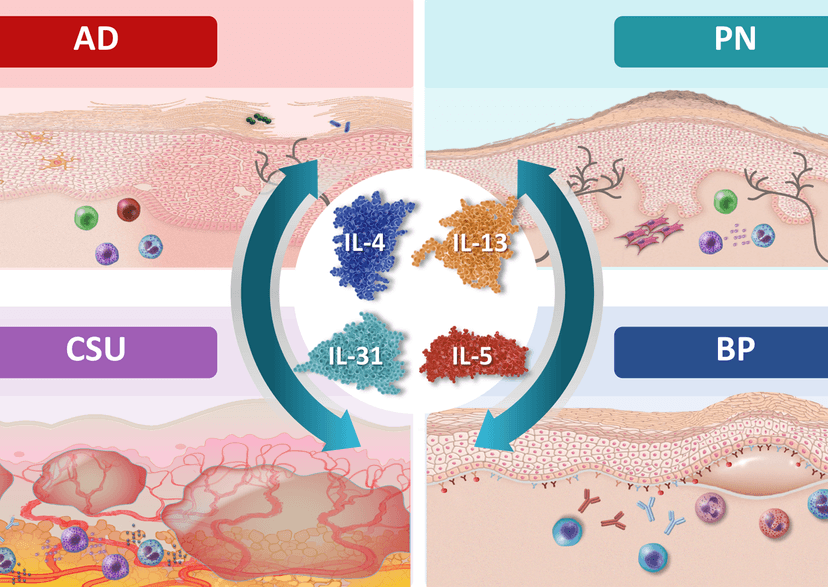
What Went Wrong? How Dysregulated Type 2 Immunity Contributes to AD, PN, CSU, and BP
This is the full presentation of the March 2025 ADVENT cross-dermatology symposium, hosted in Orlando, Florida, presenting the latest information around type 2 inflammation and its association with atopic dermatitis (AD), prurigo nodularis (PN), chronic spontaneous urticaria (CSU) and bullous pemphigoid (BP).

What Went Wrong? How Dysregulated Type 2 Immunity Contributes to AD, PN, CSU, and BP
This full video presentation of the March 2025 ADVENT cross-dermatology symposium, hosted in Orlando, Florida features Dr. Eric Simpson, Dr. Shawn Kwatra, Dr. Jason Hawkes and Dr. Victoria Werth. The faculty present the latest information around type 2 inflammation and its association with atopic dermatitis (AD), prurigo nodularis (PN), chronic spontaneous urticaria (CSU) and bullous pemphigoid (BP).
