180 search results for: type 2 inflammation

ADVENT at CHEST 2026
At CHEST 2026, the Sanofi & Regeneron ADVENT Booth #833 brings together interactive experiences and educational resources to explore Type 2 inflammation as a key feature underlying both asthma and COPD.

Challenging Misconceptions for Better Patient Care in AD and PN: Insight into Type 2 Inflammation
This symposium explores the key role type 2 inflammation plays in atopic dermatitis and prurigo nodularis and debunks common misconceptions about these skin diseases with key insights from Drs Ahuva Cices and Naiem Issa.
ADVENT at NAPNAP's 2025 National Conference
Join experts Jonathan Spergel, MD, PhD, Wanda Phipatanakul, MD, MS, and Jerry Ellen Schonfeld, CPNP, at an educational symposium as they investigate the role of type 2 inflammation in pediatric diseases. The speakers will also discuss the difficulties in diagnosis and burdens patients and their families face.
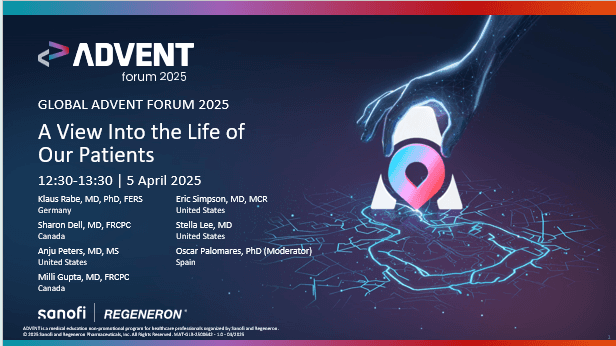
2025 ADVENT Forum | Joint Plenary Session: A View into the Life of Our Patients Video
This cross-TA plenary session addressed challenges in type 2 inflammation-driven diseases. Esteemed faculty, including Profs Klaus Rabe, Sharon Dell, Anju Peters, Milli Gupta, Eric Simpson, Stella Lee, and moderator Oscar Palomares, discussed strategies to enhance quality of life, reduce disease burden, and prioritize patient-centered care.
Coughing, Choking, Wheezing, Itching, Sneezing: Understanding the Connection Between Atopic Diseases Through a Case-Based Panel of Expert Nurse Practitioners
Join leading experts Miguel Lanz, Lakshi Aldredge, Angela Bretton, and Hilary Ugras in an engaging case-based discussion that explores the interconnected nature of chronic underlying type 2 inflammation and its profound impact across multiple diseases.
ADVENT AT AANP 2025 | Coughing, Choking, Wheezing, Itching, Sneezing: Understanding the Connection Between Atopic Diseases Through a Case-Based Panel of Expert Nurse Practitioners
Join leading experts Miguel Lanz, Lakshi Aldredge, Angela Bretton, and Hilary Ugras in an engaging case-based discussion that explores the interconnected nature of chronic underlying type 2 inflammation and its profound impact across multiple diseases.

AANP 2025 | Atopic Diseases & a Case-Based Panel of Nurse Practitioners
Experts from different specialties use a case-based discussion to understand type 2 inflammatory diseases from a nurse practitioner perspective.

Shared and Distinct: The Role of Type 2 Inflammation in Skin Diseases
Dr Donna Culton walks through the pathophysiology of type 2 inflammation in inflammatory skin diseases, using bullous pemphigoid as an example. Drs Eichenfield, Elmariah, and Hawkes join to discuss the role of type 2 inflammation across atopic dermatitis, prurigo nodularis, and chronic spontaneous urticaria, respectively.

Type 2 Inflammatory Disease: What Are the Mechanisms that Contribute to the Development of Other Atopic Comorbidities?
In this soundbite video from the April 2025 ADVENT Forum in Lisbon, Portugal, Prof. Oscar Palomares explains how type 2 inflammation and barrier dysfunction contribute to the development of atopic comorbidities and increased susceptibility to infections.

Beneath the Surface: How Autoimmunity and Predominantly Type 2 Inflammation Mediate BP
Professor Ulrike Raap reviews the pathophysiology of BP, highlighting the role of type 2 inflammation, in this video from EADV 2025

ERS 2024 | Unraveling the Role of Type 2 Inflammation in COPD
Professor Mona Bafadhel presents a comprehensive overview of type 2 inflammation in COPD, exploring its underlying mechanisms, clinical manifestations, and implications for patient outcomes.
Prurigo Nodularis: Type 2 Inflammation Links Neuronal Dysfunction and Fibrosis
This infographic highlights how PN is driven by type 2 inflammation, linking immune dysregulation, fibroblast activation, and neuronal dysfunction to nodule formation. It also shows how cytokine-mediated changes in neuronal architecture increase excitability and chronic itch, where resulting lesions and scarring significantly impact patients’ psychological well-being.
