180 search results for: type 2 inflammation
Complex EoE Pathophysiology Beyond Esophageal Eosinophilia
Dr. Jonathan Spergel and Prof. Arjan Bredenoord highlight the importance of different immune cells in type 2 inflammation in EoE.
ERS 2024 | Living With COPD: Linking Inflammation with Patient Burden
Professor Henrik Watz explores the complex relationship between inflammation and COPD, highlighting its impact on patients' health and overall quality of life.
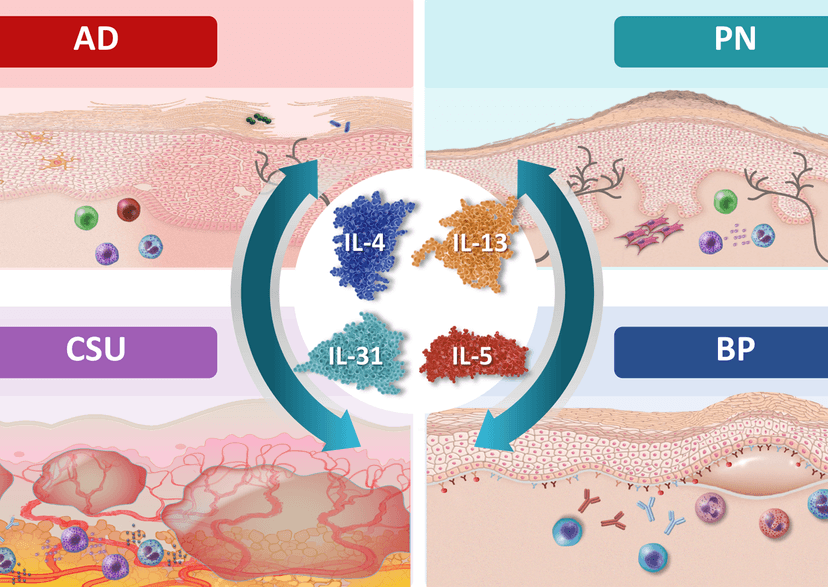
What Went Wrong? How Dysregulated Type 2 Immunity Contributes to AD, PN, CSU, and BP
This is the full presentation of the March 2025 ADVENT cross-dermatology symposium, hosted in Orlando, Florida, presenting the latest information around type 2 inflammation and its association with atopic dermatitis (AD), prurigo nodularis (PN), chronic spontaneous urticaria (CSU) and bullous pemphigoid (BP).

What Went Wrong? How Dysregulated Type 2 Immunity Contributes to AD, PN, CSU, and BP
This full video presentation of the March 2025 ADVENT cross-dermatology symposium, hosted in Orlando, Florida features Dr. Eric Simpson, Dr. Shawn Kwatra, Dr. Jason Hawkes and Dr. Victoria Werth. The faculty present the latest information around type 2 inflammation and its association with atopic dermatitis (AD), prurigo nodularis (PN), chronic spontaneous urticaria (CSU) and bullous pemphigoid (BP).
Tailored Medicine in COPD: Understanding Phenotypes, Endotypes, and Genotypes
This infographic outlines how endotyping, phenotyping, and genotyping are interrelated concepts that are crucial for improving the way patients with COPD are characterized and how understanding these concepts can better optimize patient care

GOLD 2023 | Beyond a One Size Fits All Approach: Recognizing the Heterogeneity of COPD
Drs. Stephen I. Rennard and Igor Barjaktarevic discuss the diverse clinical aspects of COPD, emphasizing the role of inflammation and the importance of recognizing the heterogeneity of COPD.

Beyond the Visible: The Cumulative Burden of Prurigo Nodularis
Professor Matthias Augustin emphaizes that prurigo nodularis is a chronic systemic disease with a significant and multifaceted burden, encompassing both visible skin manifestations and hidden psychosocial and physical comorbidities.
Atopic Dermatitis and Prurigo Nodularis: Clarifying Perspectives and Common Misconceptions
This is the ADVENT-branded video of the IDEF presentation that was presented during the 1-hour webinar on December 1st featuring both Dr. Sarina Elmariah and Dr. Jason Hawkes.
Shedding Light on PN: Confronting Misconception
Dr. Naiem Issa debunks common misconceptions in prurigo nodularis with key clinical insights.

Misconception on AD Pathomechanisms
Dr. Jason Hawkes provides key pathophysiologic insights and debunks common misconceptions surrounding atopic dermatitis.
Clarifying CSU: Separating Facts from Misconceptions
Dr. Diego Dasliva untangles popular misconceptions surrounding chronic spontaneous urticaria.
