82 search results for: Atopic Dermatitis

Identification and Management of AD Uncontrolled With Topical Therapies in Children
In this expert interview video focusing on topics from the October 2024 ADVENT symposium at EAPS in Vienna, Austria, Dr Perla Lansang discusses how to identify pediatric patients with AD uncontrolled with topical therapies, considerations for the next step in care for these patients, and the potential benefits of early intervention with systemic treatment

Type 2 Inflammation Within Skin Tissue in AD
In this highlight video from the September 2024 ADVENT symposium at EADV’s Annual Meeting in Amsterdam, the Netherlands, Dr. Stephan Weidinger discusses how type 2 inflammation contributes to epidermal barrier dysfunction, perivascular infiltration and plasma protein leakage, and chronic itch in AD.

Epidemiology and Pathophysiology of AD in Children
In this expert interview video focusing on topics from the October 2024 ADVENT symposium at EAPS in Vienna, Austria, Dr Christine Bangert discusses the epidemiology of AD in children and the role of type 2 cytokines in driving the pathophysiology of the disease

The Role of Type 2 Inflammation in Moderate-to-Severe AD
In this expert interview video focusing on topics from the September 2024 ADVENT symposium at EADV’s Annual Meeting in Amsterdam, the Netherlands, Dr. Stephan Weidinger discusses how type 2 inflammation contributes to the systemic inflammation seen in patients with moderate-to-severe AD.
Considerations for Disease Modification in AD
In this highlight video from the September 2024 ADVENT symposium at EADV’s Annual Meeting in Amsterdam, the Netherlands, Dr. Eric Simpson explores potential considerations when discussing the concept of disease modification and how early intervention might be disease modifying in AD.

Early Intervention and Disease Modification in AD: Can We Change the Course of the Disease?
This video presentation of the September 2024 ADVENT symposium at EADV’s Annual Meeting in Amsterdam, the Netherlands features Dr. Stephan Weidinger, Dr. Eric Simpson, and Dr. Marjolein de Bruin-Weller. The faculty investigate the inflammatory processes driven by type 2 cytokines that lead to the local and systemic clinical effects of AD, the potential benefits of treating patients with AD early in the disease course, and the emerging real-world data on the use of advanced systemic therapies for patients with AD.

ADVENT On Air | Charting a New Course: The Frontier of Early Intervention and Disease Modification in AD
Join Drs. April Armstrong and Lisa Beck for a conversation around the long-term burden and effects of AD. They will discuss the underlying pathophysiology of AD and how early intervention and disease modification may impact disease course.
ADVENT in Orlando, 2025
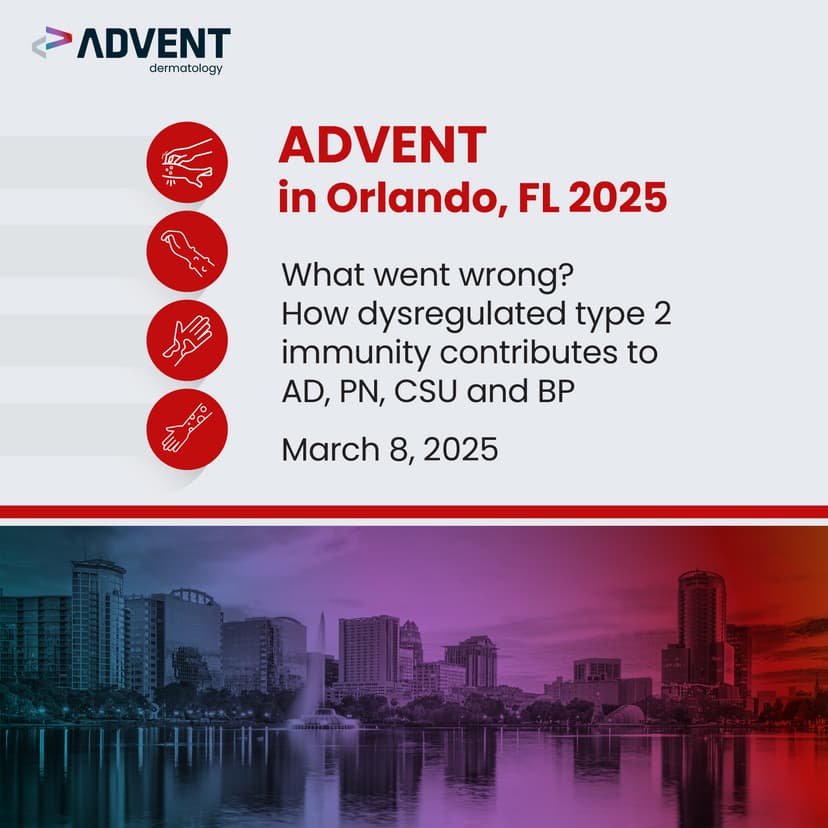
Type 2 inflammation contributes to many dermatologic diseases, which may lead to potentially life-changing burdens and challenges to patients and caregivers. By uncovering the role of type 2 inflammation in the pathophysiology of AD, PN, CSU, and BP, we can move forward in our understanding of each disease. Join global experts for an educational symposium on March 8th that will uncover the role of type 2 inflammation in the pathophysiology of AD, PN, CSU, and BP and explore questions driving current research in each disease.

ADVENT Forum 2025 Event Page
From the April 2025 ADVENT Forum in Lisbon, Portugal, this event page serves to spotlight curated soundbites from dermatology and immunology experts that connect the evolving science of type 2 inflammation to clinical application.
How Does Protective Type 2 Immunity Become Harmful Type 2 Inflammation?
In this video from the March 2025 ADVENT symposium in Orlando, Florida, Dr. Eric Simpson discusses how protective type 2 immunity can become dysregulated, leading to harmful type 2 inflammation. The associated inflammatory process can contribute to the pathophysiology of several dermatological diseases, including AD, PN, CSU, and BP.
