79 search results for: Burden of Disease

Type 2 Cytokines Have Multiple Critical Roles in BP That Contribute to Inflammation and Itch
In this soundbite video from the April 2025 ADVENT Forum in Lisbon, Portugal, Dr. Eric Simpson outlines why early, targeted control of type 2 inflammation may modify the course of atopic dermatitis by addressing upstream drivers of barrier dysfunction, dysbiosis, and itch.

Charting the Future: Preventing the Atopic March
In this video from the April 2025 WCPD symposium, Dr Eulàlia Baselga discusses how early intervention during infancy and childhood in patients with AD may reduce the progression of the atopic march. Dr Baselga goes on to review data showing how the reduction of biomarkers such as IgE and CCL17 may reduce inflammation and sensitization that contribute to atopic comorbidities.

What Went Wrong? How Dysregulated Type 2 Immunity Contributes to AD, PN, CSU, and BP
This full video presentation of the March 2025 ADVENT cross-dermatology symposium, hosted in Orlando, Florida features Dr. Eric Simpson, Dr. Shawn Kwatra, Dr. Jason Hawkes and Dr. Victoria Werth. The faculty present the latest information around type 2 inflammation and its association with atopic dermatitis (AD), prurigo nodularis (PN), chronic spontaneous urticaria (CSU) and bullous pemphigoid (BP).
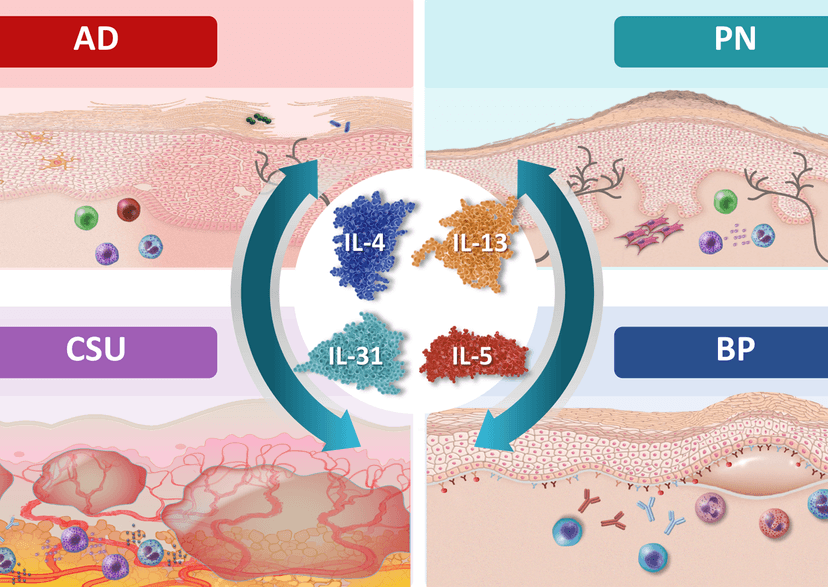
What Went Wrong? How Dysregulated Type 2 Immunity Contributes to AD, PN, CSU, and BP
This is the full presentation of the March 2025 ADVENT cross-dermatology symposium, hosted in Orlando, Florida, presenting the latest information around type 2 inflammation and its association with atopic dermatitis (AD), prurigo nodularis (PN), chronic spontaneous urticaria (CSU) and bullous pemphigoid (BP).

Prevalence of Food Allergy and Other Atopic Comorbidities in Children With AD
In this highlight video from the October 2024 ADVENT symposium at EAPS in Vienna, Austria, Dr Mark Boguniewicz discusses the prevalence of food sensitization and food allergy in pediatric patients with AD, clarifying the difference between the two. Dr Boguniewicz also discusses the prevalence of other atopic comorbidities in children with AD

ADVENT On Air | Exploring The Urgency to Treat in Atopic Dermatitis
Professor Lisa Beck explores the chronic and persistent burden of atopic dermatitis (AD) as well as the concept of early intervention in patients with AD.

Persistence of AD From Childhood Into Adulthood
In this highlight video from the October 2024 ADVENT symposium at EAPS in Vienna, Austria, Dr Christine Bangert describes how AD can persist into adulthood in many children with moderate-to-severe AD and discusses the risk factors for such persistence.

Monitoring Lung Function Is an Important Aspect of Pediatric Asthma Management
Navigate through this interactive infographic to learn more about why lung function is important to monitor in pediatric patients with asthma and the noninvasive procedures that are available for implementation in clinical practice.
