180 search results for: type 2 inflammation

Dispelling Persistent Myths About PN
Dr. Lakshi Aldredge sets the record straight regarding common misconceptions about prurigo nodularis.
AD: Challenging the Conventional Narrative
Dr. Ahuva Cices provides key pathophysiologic insights and dispels common misconceptions surrounding atopic dermatitis.
The Growing Burden: Cumulative Disease Impact and Comorbidities in Pediatric AD
Dr. Yu and Dr. Wine Lee discuss the clinical presentation and burden of atopic dermatitis, the role of type 2 inflammation in the development of atopic comorbidities, and the importance of early intervention in potentially preventing cumulative life course impairment in AD at PeDRA 2025.

Atopic Dermatitis: Pathomechanisms: Clarifying Perspectives and Misconceptions
Join Lisa Swanson, MD, and Gina Mangin, MPAS, PA-C, for an in-depth discussion on the immunopathogenesis of atopic dermatitis (AD), highlighting the central role of key type 2 inflammatory pathways in disease development and progression. This program explores how these pathways contribute to clinical manifestations across the AD spectrum and addresses common perceptions and misconceptions surrounding AD pathomechanisms, offering clarifying insights to support informed clinical decision-making.
ADVENT On-Air Podcast: The Multifaceted Patient Burden and Drivers of Disease in Prurigo Nodularis
In this episode, Dr. Sarina Elmariah and Dr. Brian Kim explore prurigo nodularis (PN), with a focus on severe itch, fibrotic skin lesions, and their impact on patients’ quality of life. They discuss PN epidemiology, common comorbidities, and the challenges of managing multimorbid patients, while breaking down the neuroimmune mechanisms, highlighting the role of type 2 cytokines in itch and lesion development.
ADVENT On Air | The Road Ahead: Achieving Remission for Patients With Asthma
Join Professors Klaus Rabe and Ian Pavord as they discuss the importance of on-treatment clinical remission as a goal in asthma management.
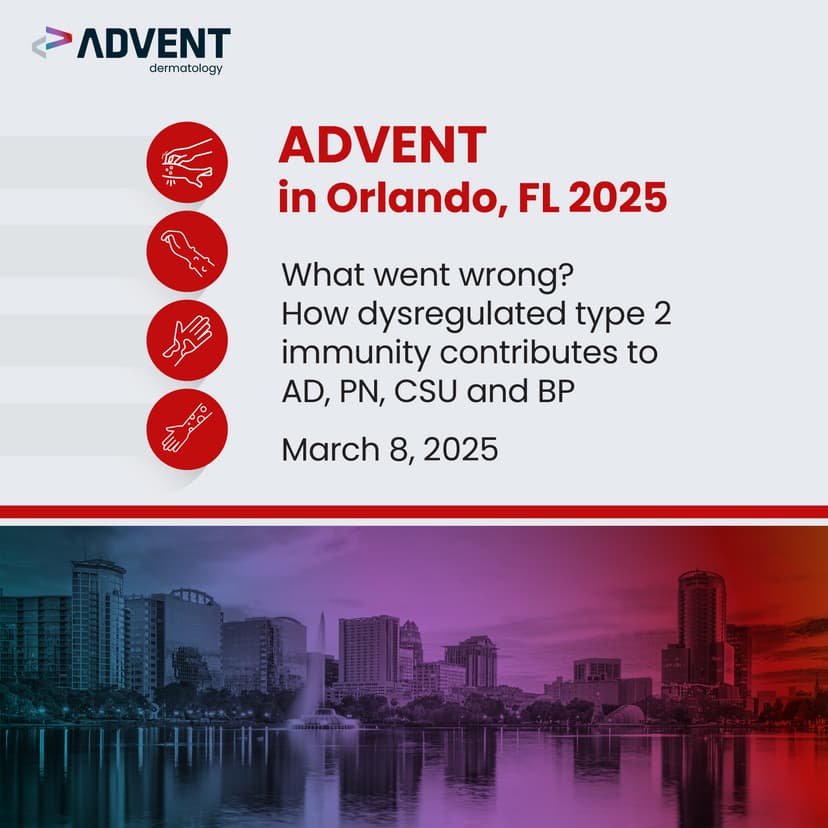
ADVENT in Orlando, 2025
Type 2 inflammation contributes to many dermatologic diseases, which may lead to potentially life-changing burdens and challenges to patients and caregivers. By uncovering the role of type 2 inflammation in the pathophysiology of AD, PN, CSU, and BP, we can move forward in our understanding of each disease. Join global experts for an educational symposium on March 8th that will uncover the role of type 2 inflammation in the pathophysiology of AD, PN, CSU, and BP and explore questions driving current research in each disease.

The Role of IL-4 and IL-13 in CSU
The pathophysiology of chronic spontaneous urticaria (CSU) is complex and involves mast cell degranulation and elements of type 2 inflammation. Learn more about the role of mast cells, basophils, and type 2 inflammatory cells and cytokines involved in the pathophysiology of CSU.

IDS LearnSkin ADVENT Symposium
Join expert James Song for an educational symposium dispelling myths surrounding the inflammatory pathways and clinical features of atopic dermatitis.

Prurigo Nodularis (PN): Understanding Its Clinical Features, Complex Burden, and Underlying Mechanisms
Explore the clinical features, complex burden, and underlying mechanisms of PN.
The Role of IL-4 and IL-13 in the Pathophysiology of CSU
Dr. Jason Hawkes details the role of IL-4 and IL-13 in the pathophysiology of CSU at EADV 2025
Neuroimmune Dysfunction Is Critical in the Pathophysiology of Prurigo Nodularis
Dr. Sarina Elmariah explains the importance of neuroimmune crosstalk in the development of prurigo nodularis.
