41 search results for: Chronic Spontaneous Urticaria
Chronic Spontaneous Urticaria Is a Clinical Diagnosis
Dr. Jason Hawkes elucidates the different types of urticaria and the key features that distinguish chronic spontaneous urticaria.
Essential Tools for Effective Care of Patients With Chronic Spontaneous Urticaria
Tune in as Dr. Jason Hawkes describes how to assess disease activity in chronic spontaneous urticaria.
Key Pathophysiological Mechanisms of Chronic Spontaneous Urticaria Are Driven by Type 2 Inflammation
Join Dr. Jason Hawkes as he explains the importance of type 2 inflammation in chronic spontaneous urticaria.
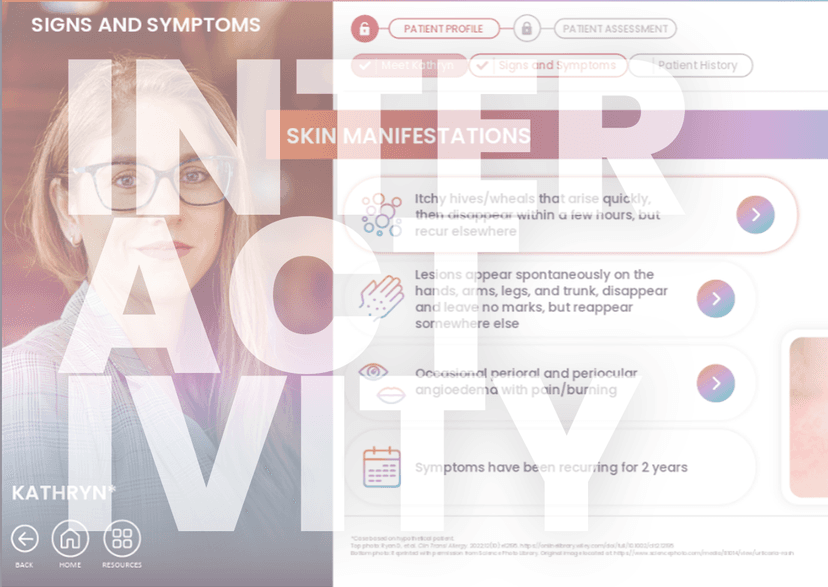
Guideline-Based Diagnosis of Chronic Spontaneous Urticaria: An Interactive Patient Case
Learn more about the guideline-based diagnosis of chronic spontaneous urticaria with this interactive patient case.
Chronic Spontaneous Urticaria Mechanism of Disease Animation
Explore the clinical presentation and pathophysiology of chronic spontaneous urticaria in this animated video. Learn about the complex mechanism of disease involving mast cell activation and the release of inflammatory mediators.

Shared and Distinct: The Role of Type 2 Inflammation in Skin Diseases
Dr Donna Culton walks through the pathophysiology of type 2 inflammation in inflammatory skin diseases, using bullous pemphigoid as an example. Drs Eichenfield, Elmariah, and Hawkes join to discuss the role of type 2 inflammation across atopic dermatitis, prurigo nodularis, and chronic spontaneous urticaria, respectively.

Beyond Signs and Symptoms: Broadening Treatment Goals in Dermatology
Dr Lawrence Eichenfield explores the broadening of treatment goals for long-term disease control, highlighting the importance of this approach in atopic dermatitis. Drs Culton, Elmariah, and Hawkes expand the discussion to further examine specific management goals unique to each skin disease (bullous pemphigoid, prurigo nodularis, and chronic spontaneous urticaria).
Time to Act: Reducing the Impact of Uncontrolled Disease Through Early Intervention
Dr Jason Hawkes describes the importance of early intervention for patients with uncontrolled skin diseases and the effectiveness of evidence-based management strategies, sharing a patient case and his clinical insights with chronic spontaneous urticaria. Drs Eichenfield, Elmariah, and Culton join to review the burdens faced by patients with atopic dermatitis, prurigo nodularis, and bullous pemphigoid, respectively.

Cracking the Code: Diagnosing and Managing Skin Diseases With Type 2 Inflammation
This symposium delves into the pivotal role of type 2 inflammation in diverse skin conditions, including atopic dermatitis, prurigo nodularis, chronic spontaneous urticaria, and bullous pemphigoid. It highlights both shared and distinct disease mechanisms and patient burdens, providing crucial insights for optimizing clinical management strategies through a series of engaging panel discussions with Drs Eichenfield, Elmariah, Culton, and Hawkes.
Cracking the Code: Diagnosing and Managing Skin Diseases With Type 2 Inflammation
This 2-hour educational program delves into the pivotal role of type 2 inflammation in diverse skin conditions, including atopic dermatitis, prurigo nodularis, bullous pemphigoid, and chronic spontaneous urticaria. It will highlight both shared and distinct disease mechanisms and patient burdens, providing crucial insights for optimizing clinical management strategies. Experts will guide the audience through diverse patient cases to illuminate diagnostic nuances and the pathophysiology of each condition. These cases will also highlight the importance of shared decision-making and the broadening of treatment goals beyond symptom control. Dynamic panel discussion and active audience participation will be facilitated through real-time polling and curated Q&A sessions.
Inside the Hive: Type 2 Inflammatory Pathways in Chronic Spontaneous Urticaria
Join Dr. Jason Hawkes in discussing the burden of CSU and how type 2 inflammation contributes to the development of chronic wheals (hives) and angioedema
