11 search results for: disease modification

Early Intervention and Disease Modification in AD: Can We Change the Course of the Disease?
Highlights from the ADVENT educational symposium at EADV 2024 where Professors Eric Simpson, Stephan Weidinger, and Marjolein de Bruin-Weller explored the local and systemic effects of type 2 inflammation in AD and potential benefits of early intervention with regard to disease modification.

ADVENT On Air | Charting a New Course: The Frontier of Early Intervention and Disease Modification in AD
Join Drs. April Armstrong and Lisa Beck for a conversation around the long-term burden and effects of AD. They will discuss the underlying pathophysiology of AD and how early intervention and disease modification may impact disease course.
How Biologic Therapy May Lead to Disease Modification in Infants and Children with Atopic Dermatitis
The underlying pathophysiology of atopic dermatitis (AD) is driven by dysregulation of type 2 immunity that contributes to skin barrier dysfunction. AD typically develops very early in life and children with AD often develop other atopic conditions such as food allergy, asthma, and allergic rhinitis in a progression called the atopic march. Early treatment may help reduce the atopic march and other comorbidities to lessen the lifetime burden created by these diseases. There may even be a window of opportunity for disease modification.

Considerations for Disease Modification in AD
In this highlight video from the September 2024 ADVENT symposium at EADV’s Annual Meeting in Amsterdam, the Netherlands, Dr. Eric Simpson explores potential considerations when discussing the concept of disease modification and how early intervention might be disease modifying in AD.

Early Intervention and the Potential For Disease Modification in AD
In this expert interview video focusing on topics from the September 2024 ADVENT symposium at EADV’s Annual Meeting in Amsterdam, the Netherlands, Dr. Eric Simpson discusses key considerations for disease modification and the importance of early intervention in treating patients with AD.

Early Intervention and Disease Modification in AD: Can We Change the Course of the Disease?
This video presentation of the September 2024 ADVENT symposium at EADV’s Annual Meeting in Amsterdam, the Netherlands features Dr. Stephan Weidinger, Dr. Eric Simpson, and Dr. Marjolein de Bruin-Weller. The faculty investigate the inflammatory processes driven by type 2 cytokines that lead to the local and systemic clinical effects of AD, the potential benefits of treating patients with AD early in the disease course, and the emerging real-world data on the use of advanced systemic therapies for patients with AD.
The Benefits of Early Intervention in AD: More Than Skin Deep
Many AD treatment goals focus on clinical manifestations, so that if a patient is free of lesions, their disease is considered well controlled. However, the inflammatory process underlying AD reaches far beyond the skin, affecting patients in unique ways at different stages of their lives. Education on the importance of treating AD beyond the skin and altering the treatment approach to fit the individual patient will help improve clinical management and reduce long-term patient burden.

KOL Video Interview – Dr Paula Luna
In this exclusive video interview, Dr Paula Luna discusses how disease modification can be defined in AD and how IgE may be used as a biomarker in AD.
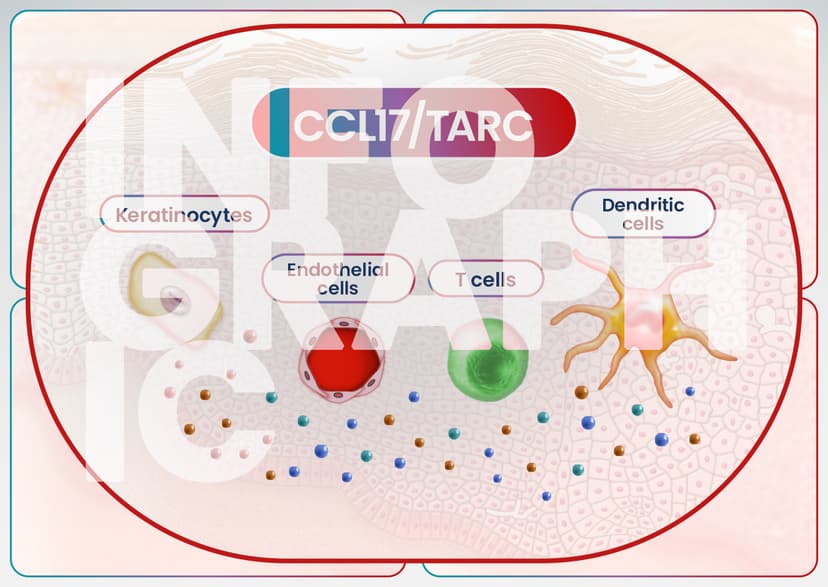
CCL17 (TARC): A Key Player and Biomarker in Atopic Dermatitis
An infographic to explore the the key roles of CCL17 (TARC) in atopic dermatitis.
ADVENT at EADV 2025
Join leading dermatologists for educational symposia on atopic dermatitis, bullous pemphigoid, and chronic spontaneous urticaria at the EADV congress in Paris, France.
ADVENT at WCPD 2025
The ADVENT symposium at the 15th World Congress of Pediatric Dermatology (WCPD) will focus on discussions around disease modification in atopic dermatitis (AD) in three main topic areas: restoring the skin barrier, reducing non-atopic comorbidities, and stopping the atopic march in pediatric patients with AD aged 6 months to 11 years.
