103 search results for: Atopic Dermatitis

Can Therapy-Free Disease Control Be Achieved in Atopic Dermatitis?
In this soundbite video from the April 2025 ADVENT Forum in Lisbon, Portugal, Prof. Amy Paller reviews a Japanese study showing that early proactive treatment of infant atopic dermatitis with topical corticosteroids reduced the incidence of food allergy but was also associated with decreased gains in height and weight.
How Biologic Therapy May Lead to Disease Modification in Infants and Children with Atopic Dermatitis
The underlying pathophysiology of atopic dermatitis (AD) is driven by dysregulation of type 2 immunity that contributes to skin barrier dysfunction. AD typically develops very early in life and children with AD often develop other atopic conditions such as food allergy, asthma, and allergic rhinitis in a progression called the atopic march. Early treatment may help reduce the atopic march and other comorbidities to lessen the lifetime burden created by these diseases. There may even be a window of opportunity for disease modification.

How Biologic Therapy May Lead to Disease Modification in Infants and Children With Atopic Dermatitis
This full video presentation of the April 2025 WCPD symposium features Dr Amy Paller, Dr Paula Luna, and Dr Eulàlia Baselga. The faculty present the latest data on the possibility of achieving disease modification in infants and children with atopic dermatitis.

CLCI in Atopic Dermatitis Infographic
This infographic highlights how uncontrolled moderate‑to‑severe atopic dermatitis (AD) can lead to Cumulative Life Course Impairment (CLCI) by contributing to ongoing physical, psychological, and social burdens such as itch and sleep loss, impaired bone growth and mental health challenges. It emphasizes the importance of early and effective disease control to help reduce long‑term impact on patients.

Emerging Perspectives on the Disease Burden and Management of Children with Atopic Dermatitis
Join Christine Bangert, Mark Boguniewicz and Perla Lansang for an educational symposium on atopic dermatitis (AD) in children, exploring the diagnosis and pathophysiology of AD in children, the life-long effects of uncontrolled disease beyond the skin, and current and emerging therapies.
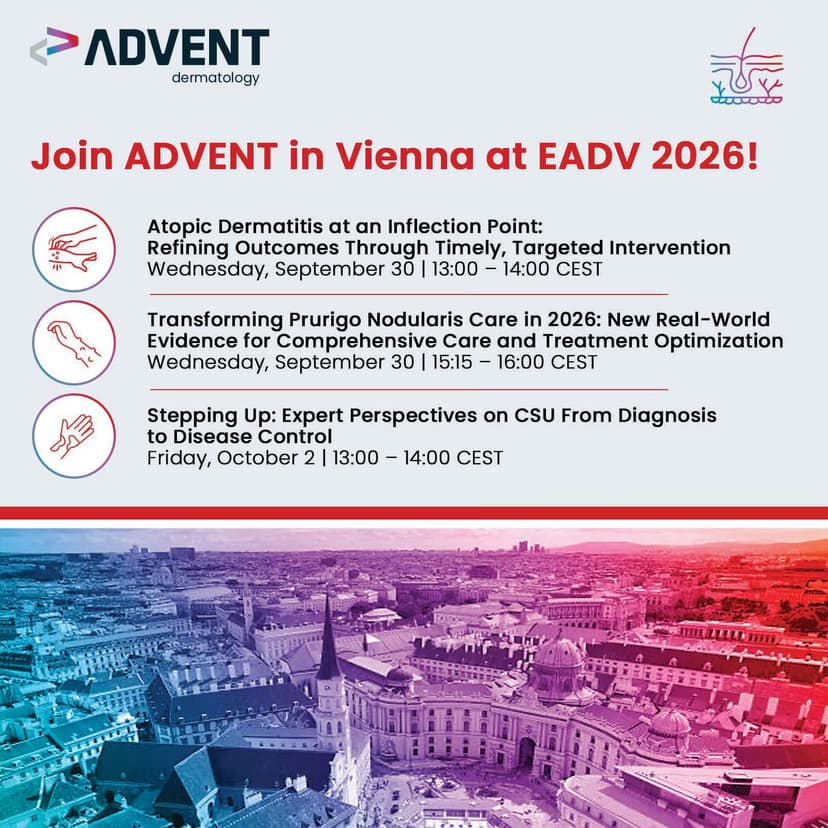
ADVENT at EADV 2026
Please join the ADVENT program at EADV 2026 for educational sessions on AD, PN, and CSU! Experience 3 high-impact sessions led by world-renowned experts, bridging scientific innovation with real-world clinical outcomes.

Decoding the Clinical Puzzle: Navigating Diagnostic Complexity Across Inflammatory Skin Diseases
Dr Sarina Elmariah highlights the clinical challenges in diagnosing inflammatory skin diseases, using prurigo nodularis as a case study. Drs Culton, Eichenfield, and Hawkes then join in to discuss additional challenges and complexities when diagnosing other skin diseases.
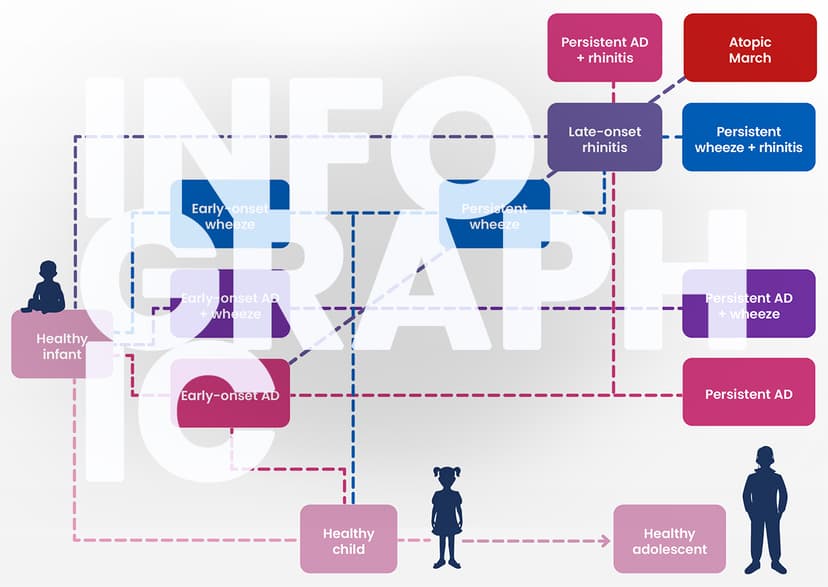
The Role of Type 2 Inflammation in Multiple Disease Trajectories
How type 2 inflammation drives atopic dermatitis and underlies other atopic diseases across multiple disease trajectories including the atopic march.

Underlying Type 2 Inflammation Drives a Chronic Itch-Scratch Cycle in Atopic Dermatitis
In this soundbite video from the April 2025 ADVENT Forum in Lisbon, Portugal, Dr. Brian Kim explains how underlying type 2 inflammation sustains the chronic itch-scratch cycle in atopic dermatitis, highlighting the interplay of barrier dysfunction, cytokine signaling, and neuronal activation.

Type 2 Inflammation and Its Role in Atopic Dermatitis
In this video of the October 2024 ADVENT symposium at EAPS in Vienna, Austria, Dr Christine Bangert reviews the epidemiology, clinical presentation, and differential diagnoses of AD in children, as well as the inflammatory processes driven by type 2 cytokines that lead to AD and its atopic comorbidities

Emerging Perspectives on the Disease Burden and Management of Children With Atopic Dermatitis
This video of the October 2024 ADVENT symposium at EAPS in Vienna, Austria features Drs Christine Bangert, Mark Boguniewicz, and Perla Lansang as they discuss the inflammatory processes driven by type 2 cytokines that lead to AD and atopic comorbidities, the multidimensional and cumulative disease burden associated with AD and its comorbidities, and the current and emerging treatment options for children with AD uncontrolled with topical therapy

Atopic Dermatitis Learning Hub
Welcome to the AD learning hub focused on key scientific education on atopic dermatitis, featuring ADVENT resources.
