18 search results for: disease severity

AFRS Disease Burden Infographic
This infographic highlights the clinical burden of Allergic Fungal Rhinosinusitis (AFRS), including disease severity, recurrence, complications, and impact on patients compared with CRSwNP.

ERS-ISIAN 2025 | Type 2 Inflammation: Links with Severe/Uncontrolled CRSwNP
Prof. Vibeke Backer provides an insightful presentation on the association of type 2 inflammation and the pathogenesis and management of severe and uncontrolled CRSwNP.

Compounded Burden of Co-existing Type 2 Airway Diseases
In this video soundbite from the EAACI 2025 symposium, Dr. Brian Lipworth discusses that co-existing type 2 inflammatory diseases are common in patients with CRSwNP & increasing severity of asthma is associated with higher severity of CRS and prevalence of nasal polyps. Additionally, he explains that patient burden is substantially greater when asthma and CRSwNP are co-existing.

ERS-ISIAN 2025 | Type 2 Inflammation and Disease Control in CRSwNP: Current Perspectives and Future Directions
The ERS-ISIAN 2025 symposium, featuring Prof. Vibeke Backer and Prof. Sietze Reitsma, titled "Type 2 Inflammation and Disease Control in CRSwNP: Current Perspectives and Future Directions," will delve into the complexities of the role of type 2 inflammation in CRSwNP.
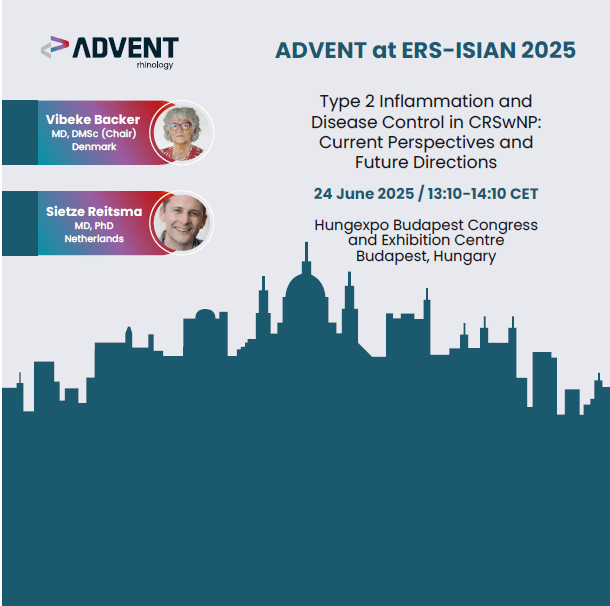
ERS-ISIAN 2025 | Type 2 Inflammation and Disease Control in CRSwNP: Current Perspectives and Future Directions
In this educational presentation, Profs. Vibeke Backer and Sietze Reitsma cover key aspects of type 2 inflammation and its role in the pathogenesis and management of CRSwNP and practical strategies for optimizing disease control and improving patient outcomes.

Understanding IL-33: A Key Factor in COPD Pathogenesis
Explore the role of interleukin (IL)-33 in chronic obstructive pulmonary disease (COPD) pathophysiology and its potential as a therapeutic target.

ERS-ISIAN 2025 | Type 2 Inflammation and Disease Control in CRSwNP: Current Perspectives and Future Directions
Vibeke Backer and Prof. Sietze Reitsma contribute their insights. Crucially, the symposium will also focus on future directions, including emerging therapies, personalized medicine approaches, and innovative strategies aimed at achieving better disease control and improved patient outcomes in CRSwNP.

CRSwNP Triathlon: An Interactive Learning Experience
Embark on this interactive triathlon challenge to uncover the interplay of type 2 inflammation, barrier dysfunction, and neuroimmune dysregulation in the disease pathology of CRSwNP.
ADVENT On Air | Expert Discussions in Dermatology
Listen to the latest updates in type 2 inflammatory science and associated skin diseases, brought to you by leading dermatology experts in the field. ADVENT On Air podcasts feature scientific conversations that explore new research into the pathophysiology, clinical features, and disease burden for a range of dermatological diseases linked to type 2 inflammation, including atopic dermatitis (AD) and prurigo nodularis (PN). Hear new insights revealed through expert-led conversations below or in your preferred podcast app.


The Burden in Patients with CRSwNP and Coexisting Asthma
This video supports improved clinical awareness and encourages comprehensive care strategies for patients living with both CRSwNP and asthma.

Partnering With Patients: Scores That Matter in CRSwNP
Learn how partnering with patients and considering the clinical relevance of symptom improvements can improve patient quality of life
