88 search results for: symposium

Pediatric Asthma Trajectory and Clinical Remission
Join Dr. Leonard Bacharier as he discusses the definition of clinical remission in pediatric asthma and how it can represent a potential target in pediatric asthma management.
Multifaceted Role of IL-13 in Airway Remodeling
Join Dr. Celeste Porsbjerg as she discusses on how IL-13 contributes to mucus plugging in asthma.
Mucus Plugging as a Potential Target in Asthma Management
Join Dr. Celeste Porsbjerg as she explores the mechanisms underlying mucus plugging development as mucociliary clearance. She explains how type 2 cytokines—particularly IL-13—impair this clearance mechanism, leading to mucus plugging, and worsened asthma outcomes.
Etiology and Diagnosis of Bullous Pemphigoid
Professor Joost Meijer discusses the complex etiology and diagnosis of BP
Factors Contributing to Diagnostic Delays in Bullous Pemphigoid
Dr. Donna Culton focuses on the challenges of diagnosis and the unmet needs for patients with BP
Pathophysiology of Blister Formation in Bullous Pemphigoid
Professor Enno Schmidt discusses the pathophysiology of BP, focusing on the role of type 2 inflammation and blister formation
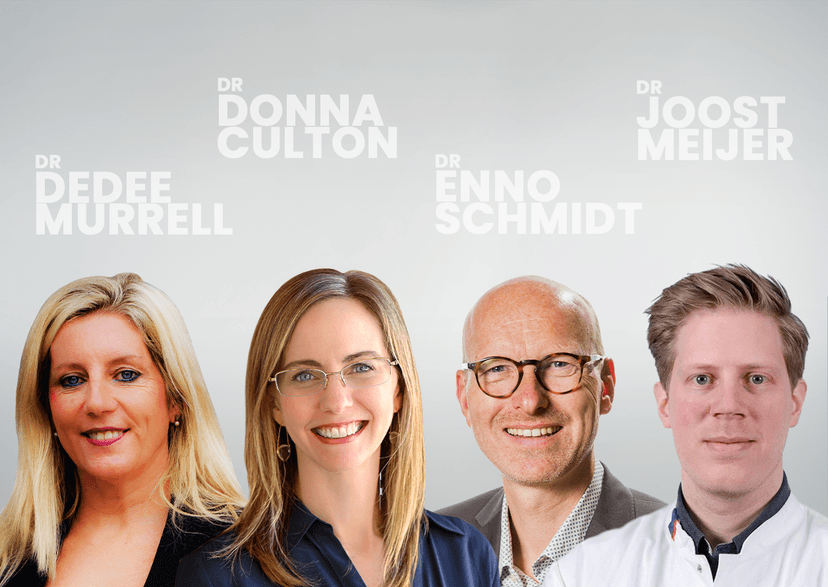
Bullous Pemphigoid (BP): Exploring New Frontiers
Join experts Dédée Murrell, Donna Aline Culton, Joost Meijer and Enno Schmidt for an educational presentation on the clinical presentation, disease burden, diagnosis, and underlying pathophysiology of bullous pemphigoid (BP). Dive deeper into unmet needs and treatment challenges faced by these patients and how targeted therapies may address them.
Translating the Science of CSU: From Pathogenesis to Patient Outcomes
Join Drs. Michihiro Hide, Marta Ferrrer, and Ana M. Giménez-Arnau as they discuss chronic spontaneous urticaria (CSU) and highlight the unmet needs, treatment challenges, and emerging therapies.
Translating the Science of CSU: From Pathogenesis to Patient Outcomes
Watch as Drs. Michihiro Hide, Marta Ferrrer, and Ana M. Giménez-Arnau discuss chronic spontaneous urticaria (CSU) and highlight the unmet needs, importance of disease control, and emerging therapies.
ADVENT at ERS 2024
The ADVENT program will present four symposia sharing the latest science in asthma and COPD at the 2024 European Respiratory Society (ERS) Congress. Visit Booth #A4.02 to learn more about ADVENT.
ADVENT at EADV 2024
Join ADVENT at EADV 2024 congress (European Academy of Dermatology and Venereology) for 2 educational symposia on type 2 inflammation in atopic dermatitis and bullous pemphigoid. Visit Booth #A13 to learn more about type 2 inflammatory skin diseases with ADVENT.
How Biologic Therapy May Lead to Disease Modification in Infants and Children with Atopic Dermatitis
The underlying pathophysiology of atopic dermatitis (AD) is driven by dysregulation of type 2 immunity that contributes to skin barrier dysfunction. AD typically develops very early in life and children with AD often develop other atopic conditions such as food allergy, asthma, and allergic rhinitis in a progression called the atopic march. Early treatment may help reduce the atopic march and other comorbidities to lessen the lifetime burden created by these diseases. There may even be a window of opportunity for disease modification.
