152 search results for: Pathophysiology
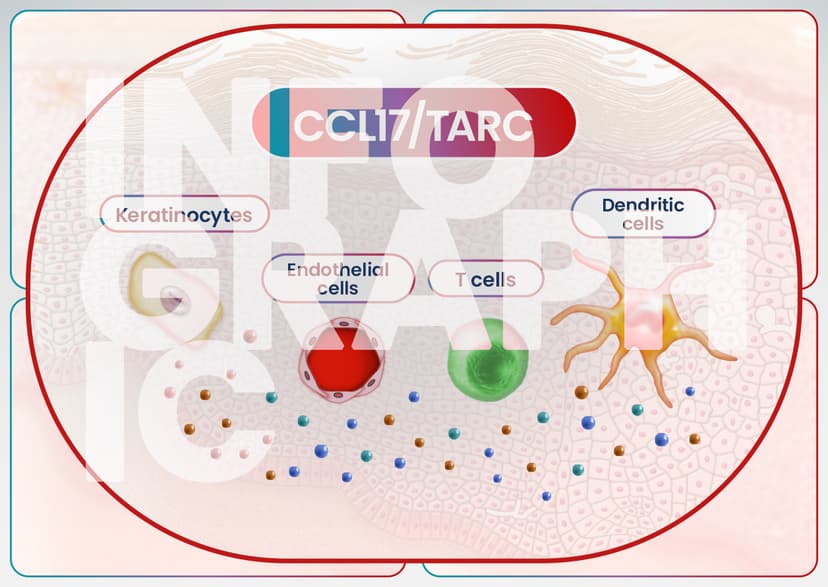
CCL17 (TARC): A Key Player and Biomarker in Atopic Dermatitis
An infographic to explore the the key roles of CCL17 (TARC) in atopic dermatitis.

Clinical Manifestations Associated With Airway Remodeling in Asthma
Join Dr. Hanania to understand how to identify patients at risk of fixed airway obstruction in clinical settings.

Impact of Exacerbations in COPD
Dr. Stephanie Christenson discusses the association between COPD exacerbations and the increased risks of morbidity and mortality

Exacerbations Lead to Worsening Lung Function
Dr. Mario Castro discusses how COPD exacerbations can predict future exacerbations and lead to progressive lung function loss in COPD patients.

Pediatric Asthma Trajectory and Clinical Remission
Join Dr. Leonard Bacharier as he discusses the definition of clinical remission in pediatric asthma and how it can represent a potential target in pediatric asthma management.

Navigating Complex Definitions: Early Intervention and Disease Modification in Atopic Dermatitis
Dr. Amy Paller discusses the evolving concepts of early intervention and disease modification in AD and describes potential biomarkers of subclinical control at EADV 2025.
KOL Video Interview – Dr Paula Luna
In this exclusive video interview, Dr Paula Luna discusses how disease modification can be defined in AD and how IgE may be used as a biomarker in AD.

ADVENT On Air | Back Again: Predicting Recurrence in Chronic Rhinosinusitis with Nasal Polyps
Learn from Drs. Buchheit and Wagenmann as they discuss key patient traits that predict disease recurrence in CRSwNP.

Can Therapy-Free Disease Control Be Achieved in Atopic Dermatitis?
In this soundbite video from the April 2025 ADVENT Forum in Lisbon, Portugal, Prof. Thomas Bieber discusses emerging evidence that therapy-free disease control may be possible in atopic dermatitis, citing pediatric dupilumab data showing that a subset of patients-maintained remission after treatment discontinuation.

Role of Type 2 Cytokines in Asthma and COPD
Dr Mario Castro explains how type 2 cytokines play a crucial role in airway remodeling and inflammation in asthma and COPD, impacting patient outcomes.
