61 search results for: disease control
The Importance of Disease Control in Reducing CSU Patient Burden
Join Professor Hide as he discusses the importance of disease control in reducing CSU patient burden.

ERS-ISIAN 2025 | Disease Control in CRSwNP
Unpack the keys to successful disease control in CRSwNP alongside expert Prof. Vibeke Backer. Learn how to navigate treatment pathways for improved patient quality of life.

ERS-ISIAN 2025 | Type 2 Inflammation and Disease Control in CRSwNP: Current Perspectives and Future Directions
The ERS-ISIAN 2025 symposium, featuring Prof. Vibeke Backer and Prof. Sietze Reitsma, titled "Type 2 Inflammation and Disease Control in CRSwNP: Current Perspectives and Future Directions," will delve into the complexities of the role of type 2 inflammation in CRSwNP.

ADVENT at IRS-ISIAN | Evolving Perspectives in CRSwNP: From Symptom Control to Disease Remission
Join Profs. Shigeharu Fujieda, Peter Hellings, and Eugenio De Corso for an educational symposium on the evolving understanding of disease control and clinical remission in CRSwNP.
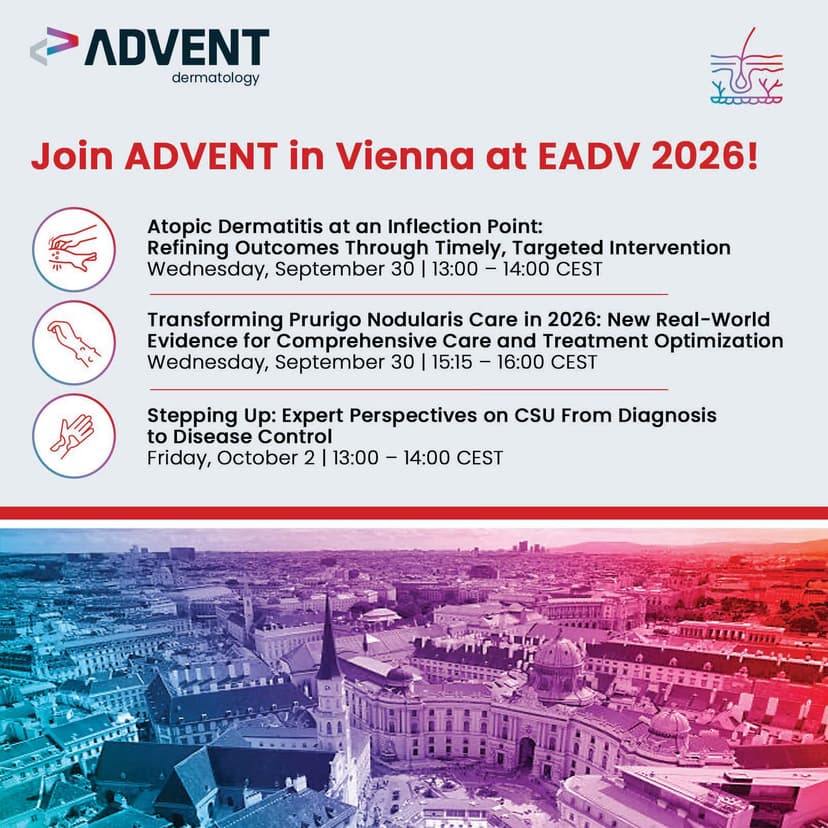
Stepping Up: Expert Perspectives on CSU From Diagnosis to Disease Control
Drs Martin Metz, Moshe Ben-Shoshan, and Michelle Tarbox shared expert perspectives on chronic spontaneous urticaria (CSU) during an engaging ADVENT symposium at EADV 2026 in Vienna, Austria. The symposium explored key considerations across the CSU patient journey, from diagnosis to disease control. Key topics included the multifaceted burden of CSU on patients, caregivers, and families, practical approaches to diagnosis and assessment of disease control, and considerations for treatment escalation and advanced therapy selection in adult and pediatric patients with CSU.

Both Clinical and Subclinical Disease Control Are Important to Achieve Disease Modification in AD
In this soundbite video from the April 2025 ADVENT Forum in Lisbon, Portugal, Dr. Eric Simpson explains how both clinical and subclinical disease control are critical for achieving true disease modification in atopic dermatitis, emphasizing the role of biomarkers in predicting long-term outcomes and guiding treatment decisions.
Breaking the Cycle of AD in Adults: Minimizing Cumulative Burden Beyond Skin and Achieving Sustained Disease Control
Prof. Tilo Biedermann discusses the key roles of type 2 cytokines IL-4, IL-13, and IL-31 in the pathophysiology of atopic dermatitis. He then describes how these cytokines can be targeted with systemic therapies to elicit long-term disease control and reduce the burden of atopic and non-atopic comorbidities, which are meaningful outcomes for patients with uncontrolled disease.

Importance of Monitoring and Maintenance in EoE
Learn about patient concerns in EoE and the benefits of adequate monitoring and effective maintenance therapy on disease control and QoL

Low Disease Activity and Disease Stability: Setting New Goals for COPD Care
This infographic explores the emerging concepts of disease activity, disease stability, and disease control in COPD.
Time to Act: Reducing the Impact of Uncontrolled Disease Through Early Intervention
Dr Jason Hawkes describes the importance of early intervention for patients with uncontrolled skin diseases and the effectiveness of evidence-based management strategies, sharing a patient case and his clinical insights with chronic spontaneous urticaria. Drs Eichenfield, Elmariah, and Culton join to review the burdens faced by patients with atopic dermatitis, prurigo nodularis, and bullous pemphigoid, respectively.

Can Therapy-Free Disease Control Be Achieved in Atopic Dermatitis?
In this soundbite video from the April 2025 ADVENT Forum in Lisbon, Portugal, Prof. Thomas Bieber discusses emerging evidence that therapy-free disease control may be possible in atopic dermatitis, citing pediatric dupilumab data showing that a subset of patients-maintained remission after treatment discontinuation.

Exploring the Potential Disease-Modifying Approaches in AD
Explore the concept of disease modification in atopic dermatitis through this interactive infographic, which highlights potential considerations such as optimal sustained disease control, subclinical inflammation, the pathophysiology of AD, and atopic/non-atopic comorbidities.
