91 search results for: Atopic Dermatitis

Potential Biomarkers of Subclinical Control in AD Pathophysiology
Dr. Amy Paller describes potential biomarkers of subclinical control at EADV 2025

On the Surface: Restoring the Skin Barrier in Patients with AD
In this clip from the April WCPD 2025 symposium, Dr Amy Paller highlights CCL17 (TARC) as an important biomarker in AD.

Hindered Growth in Children Aged <12 Years with Moderate-to-Severe AD and Potential Improvement with Dupilumab Treatment
In this soundbite video from the April 2025 ADVENT Forum in Lisbon, Portugal, Dr Amy Paller discusses how moderate-to-severe AD may hinder growth in pediatric patients and highlights data showing treatment with dupilumab may increase vertical growth in children of lower stature.

ADVENT On Air | Charting a New Course: The Frontier of Early Intervention and Disease Modification in AD
Join Drs. April Armstrong and Lisa Beck for a conversation around the long-term burden and effects of AD. They will discuss the underlying pathophysiology of AD and how early intervention and disease modification may impact disease course.
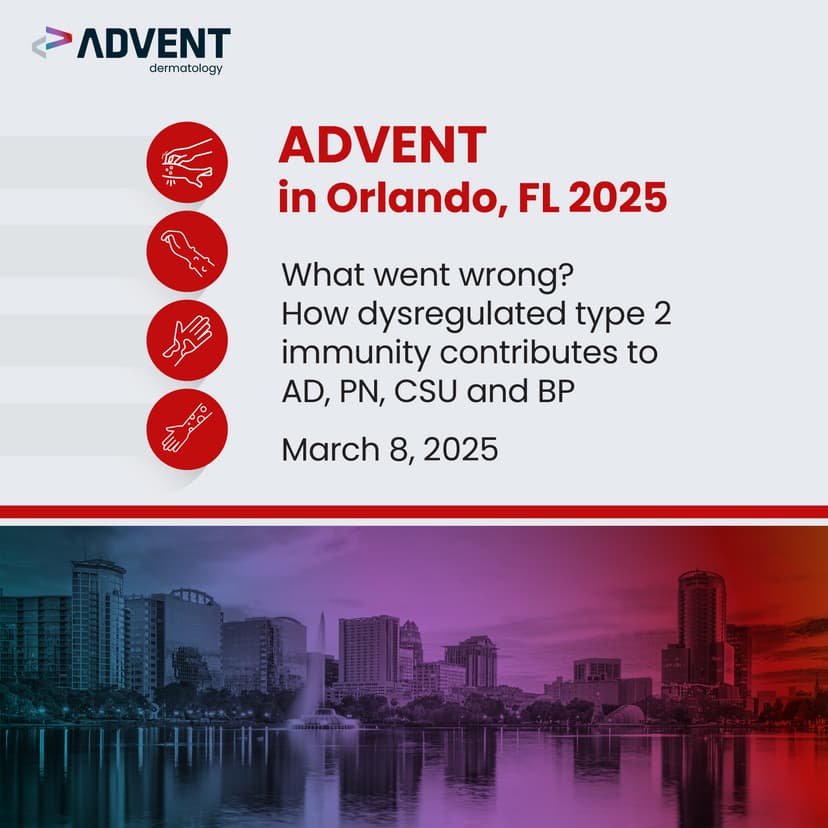
ADVENT in Orlando, 2025
Type 2 inflammation contributes to many dermatologic diseases, which may lead to potentially life-changing burdens and challenges to patients and caregivers. By uncovering the role of type 2 inflammation in the pathophysiology of AD, PN, CSU, and BP, we can move forward in our understanding of each disease. Join global experts for an educational symposium on March 8th that will uncover the role of type 2 inflammation in the pathophysiology of AD, PN, CSU, and BP and explore questions driving current research in each disease.

ADVENT Forum 2025 Event Page
From the April 2025 ADVENT Forum in Lisbon, Portugal, this event page serves to spotlight curated soundbites from dermatology and immunology experts that connect the evolving science of type 2 inflammation to clinical application.

How Does Protective Type 2 Immunity Become Harmful Type 2 Inflammation?
In this video from the March 2025 ADVENT symposium in Orlando, Florida, Dr. Eric Simpson discusses how protective type 2 immunity can become dysregulated, leading to harmful type 2 inflammation. The associated inflammatory process can contribute to the pathophysiology of several dermatological diseases, including AD, PN, CSU, and BP.
