15 search results for: biologics
Indirect Treatment Comparison of Biologics Approved for CRSwNP
In this video soundbite from the ERS-ISIAN 2025 symposium, Dr. Sietze Reitsma discusses about indirect comparison of biologics for CRSwNP, focusing on clinical outcomes like symptom relief and safety and also highlights dupilumab, omalizumab, and mepolizumab as effective and well-tolerated options.
CRSwNP at Center Stage: Impact of Biologics in Patients with Co-existing Type 2 Asthma
In this video soundbite from the EAACI 2025 symposium, Dr. Philippe Gevaert explains how biologic options for uncontrolled CRSwNP are increasing, and phase 3 studies of approved biologics show improved outcomes and decreased SCS use/surgery in patients with CRSwNP. Additionally, he explains how biologics targeting type 2 inflammatory pathophysiology potentially improve outcomes for eligible patients with co-existing CRSwNP and asthma.
ERS 2024 | Fireside Chat: What Is the Potential for Disease Modification in the Era of Biologics?
Professors Celeste Porsbjerg and Klaus Rabe and Dr Mario Castro discuss disease modification in severe asthma, including what disease modification is, how it can be identified, and how the advent of biologics may bring about disease modification.
ERS 2024 | Can Biologics Affect Airway Remodeling?
Dr Mario Castro presents the latest clinical data on biologics showcasing their effect on airway remodeling parameters and airway hyperresponsiveness in patients with severe asthma.
CEORL-HNS 2026 | Emerging Evidence of Biologics for the Treatment Landscape of CRSwNP
Join Sanofi and Regeneron for an educational symposium on type 2 inflammation, patient characteristics predictive of disease recurrence, and emerging real-world evidence for biologics in CRSwNP.
Head-to-Head Trials of Biologics in CRSwNP
In this video soundbite from the ERS-ISIAN 2025 symposium, Dr. Sietze Reitsma discusses findings from the EVEREST trial, the first head-to-head study comparison of dupilumab and omalizumab in patients with severe CRSwNP and coexisting asthma. It also introduces the ongoing TORNADO study.
ADVENT at CEORL-HNS 2026
Join Sanofi and Regeneron for an educational symposium on type 2 inflammation, patient characteristics predictive of disease recurrence, and emerging real-world evidence for biologics in CRSwNP.
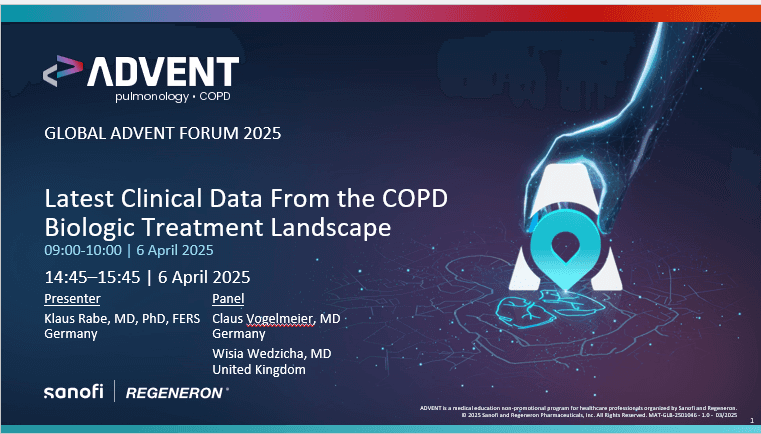
2025 ADVENT Forum | Latest Clinical Data from the COPD Biologic Treatment Landscape
Explore the dynamic advancements in COPD biologic therapies. Prof. Klaus Rabe, MD, Prof. Claus Vogelmeier, MD, and Prof. Wisia Wedzicha, MD, present and analyze the latest clinical data, offering key insights into current and emerging therapeutic strategies for managing COPD.
Differential Effects of Dupilumab and JAK Inhibitors on CCL17 (TARC) in Patients With AD
In this soundbite video from the April 2025 ADVENT Forum in Lisbon, Portugal, Prof. Oscar Palomares compares the effects of biologics and JAK inhibitors on the biomarker CCL17 (TARC) in atopic dermatitis.
ADVENT at IRS-ISIAN | The Importance of Understanding Smell Loss and Congestion in CRSwNP
Join Profs. Sachio Takeno and Joaquim Mullol for an educational symposium highlighting the multifaceted burden associated with loss of smell and congestion in patients with uncontrolled CRSwNP.

Should we Still Operate on Patients With Chronic Rhinosinusitis With Nasal Polyps?
This video clip from the EAACI 2024 symposium discusses whether patients with CRSwNP should undergo a surgery.

Can Chronic Rhinosinusitis With Nasal Polyps be Considered in Remission if the Patient has an Impaired Sense of Smell?
Dr. Backer discusses assessing remission in CRSwNP by evaluating the patient's sense of smell in this video clip from the EAACI 2024 symposium.
