76 search results for: expert insights
Distinct Mechanisms Drive Inflammation and Itch in Chronic, Type 2 Inflammatory Diseases
In this soundbite video from the April 2025 ADVENT Forum in Lisbon, Portugal, Dr Brian Kim provides an overview of itch in type 2 inflammatory skin diseases and explains how the shared and unique mechanisms that drive inflammation and itch mediate each disease in distinct ways.
Differential Effects of Dupilumab and JAK Inhibitors on CCL17 (TARC) in Patients With AD
In this soundbite video from the April 2025 ADVENT Forum in Lisbon, Portugal, Prof. Oscar Palomares compares the effects of biologics and JAK inhibitors on the biomarker CCL17 (TARC) in atopic dermatitis.
On the Surface: Restoring the Skin Barrier in Patients With AD
In this video from the April 2025 WCPD symposium, Dr Amy Paller discusses the pathophysiology of skin barrier dysfunction in AD and how regulating IL-4 and IL-13 signaling may lead to restoration of the skin barrier. Dr Paller goes on to explore how reducing certain biomarkers, such as CCL17 (TARC), may reduce inflammation that contributes to AD severity in pediatric patients.
KOL Video Interview – Dr Amy Paller
In this exclusive video interview, Dr Amy Paller discusses two topics: 1) The importance of CCL17 (TARC) as a biomarker in pediatric patients with AD, and 2) How IL-4 and IL-13 contribute to skin barrier dysfunction in AD.
Normalizing Skin Barrier by Inhibiting IL-4 & IL-13, or IL-13 Alone
Dr. Ramien explores how advanced systemic therapies may modify atopic dermatitis pathomechanisms including skin barrier dysfunction, and neuroimmune dysregulation
ERS-ISIAN 2023 | Implementation of Guidelines into Daily Practice: Past, Present, and Future
Dr. Stella Lee explores the past, present and future implementation of guidelines into daily practice
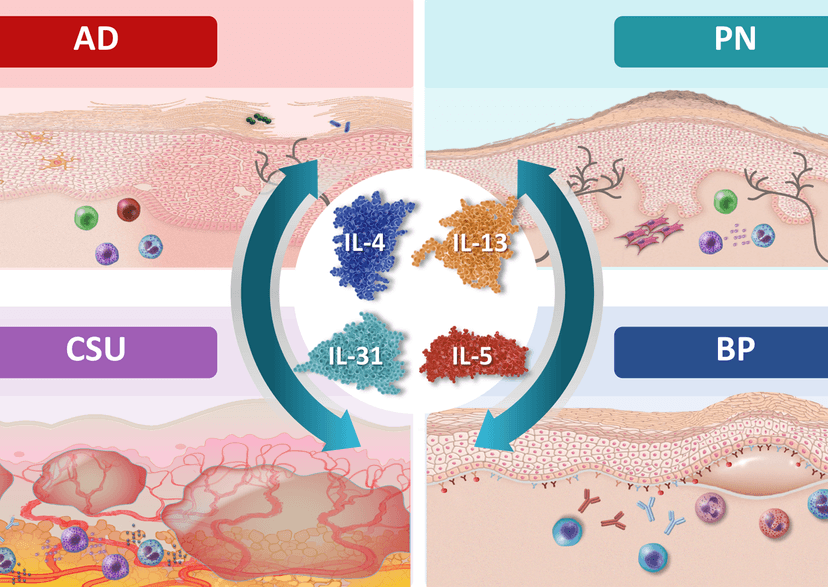
What Went Wrong? How Dysregulated Type 2 Immunity Contributes to AD, PN, CSU, and BP
This is the full presentation of the March 2025 ADVENT cross-dermatology symposium, hosted in Orlando, Florida, presenting the latest information around type 2 inflammation and its association with atopic dermatitis (AD), prurigo nodularis (PN), chronic spontaneous urticaria (CSU) and bullous pemphigoid (BP).
Why targeting Type 2 Inflammation is important in the treatment of skin diseases like AD, PN and CSU
Dr. Palomares discusses how type 2 inflammation, an aberrant immune response, underlies skin diseases like atopic dermatitis, prurigo nodularis, and chronic spontaneous urticaria, linking to their clinical symptoms.
Coexisting Type 2 Inflammatory Diseases Can Add to the Patient Overall Disease Burden
In this soundbite video from the April 2025 ADVENT Forum in Lisbon, Portugal, Prof. Oscar Palomares highlights how patients with type 2 inflammatory diseases often experience multimorbidities, with overlapping symptoms that amplify their overall disease burden and impact quality of life.

ERS-ISIAN 2023 | From Endotype to Phenotype: Linking Pathophysiology to Burden and Clinical Management for Patients with Uncontrolled and/or Severe CRSwNP
Prof. Peter Hellings discusses the interconnection between the pathophysiology, burden and clinical management of uncontrolled and/or severe CRSwNP
What role does IL-4 and IL-13 have in driving Type 2 inflammatory skin disease (AD, PN, CSU)?
Dr. Oscar Palomares explains that IL-4 and IL-13 are crucial cytokines in type 2 inflammation, playing both unique and overlapping roles, including T cell expansion and contributing to clinical symptoms in chronic diseases.
ADVENT On Air | Early Intervention and Disease Modification in Atopic Dermatitis
Prof. Thomas Bieber explores early intervention and disease modification in atopic dermatitis.
