27 search results for: quality of life

The Patient Burden of Chronic Pruritus of Unknown Origin (CPUO)
An infographic describing the etiology, epidemiology, challenges in diagnosis and patient burden of CPUO.

Coexisting Type 2 Inflammatory Diseases Can Add to the Patient Overall Disease Burden
In this soundbite video from the April 2025 ADVENT Forum in Lisbon, Portugal, Prof. Oscar Palomares highlights how patients with type 2 inflammatory diseases often experience multimorbidities, with overlapping symptoms that amplify their overall disease burden and impact quality of life.

ADVENT Forum 2025 On Demand page
Watch on-demand expert soundbites recorded at the April 2025 ADVENT Forum in Lisbon, Portugal, featuring dermatology and immunology perspectives on mechanisms and clinical practice. Topics range from disease mechanism to patient care and quality of life, spanning atopic dermatitis (AD), prurigo nodularis (PN), chronic spontaneous urticaria (CSU) and bullous pemphigoid (BP).

Type 2 Inflammatory Diseases Can Negatively Impact Patients and Their Caregivers
In this soundbite video from the April 2025 ADVENT Forum in Lisbon, Portugal, Prof Oscar Palomares highlights the substantial impact of type 2 inflammatory diseases on the quality of life of patients and their caregivers.

Children and EoE: More Than Just Being a Picky Eater
Join Prof. Alexandra Papadopoulou as she reviews the multifaceted burden of children with EoE.
National Eosinophil Awareness Week 2024 | May 19-25
In recognition of National Eosinophil Awareness Week, ADVENT is providing medical education resources to increase awareness of eosinophilic esophagitis (EoE).
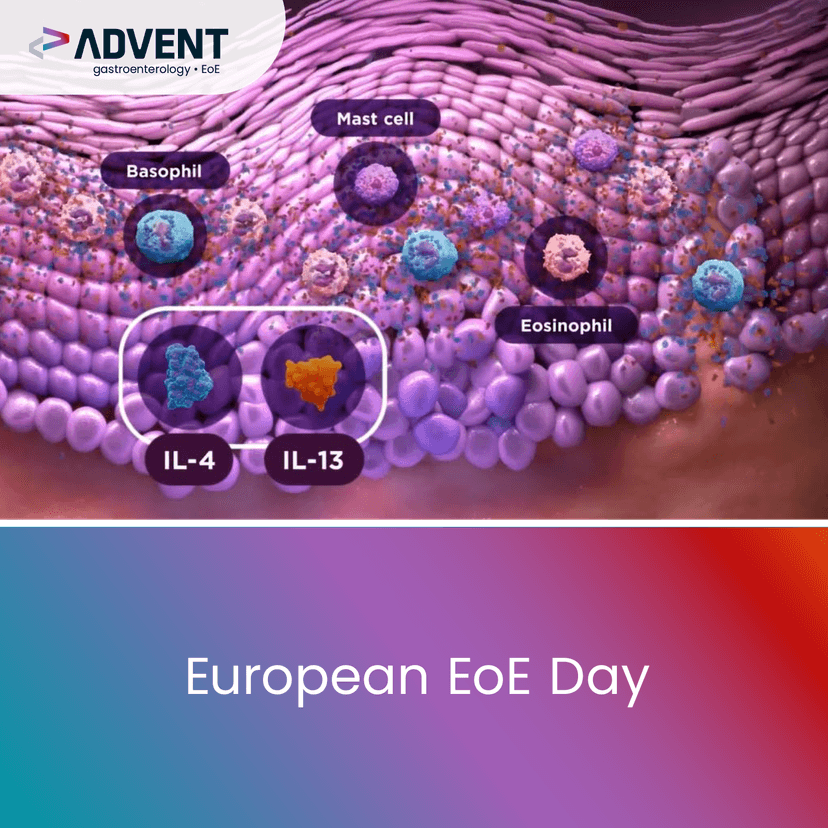
European EoE Day 2024 | May 22
In recognition of European EoE Day, ADVENT is providing medical education resources to increase awareness of eosinophilic esophagitis (EoE).

What Went Wrong? How Dysregulated Type 2 Immunity Contributes to AD, PN, CSU, and BP
The March 2025 ADVENT symposium in Orlando, Florida brought together 4 dermatology experts to explore the evolving science of type 2 inflammation. Type 2 inflammation plays a central role in the pathophysiology of multiple dermatological diseases, driving chronic immune dysregulation that affects patients with atopic dermatitis (AD) prurigo nodularis (PN), chronic spontaneous urticaria (CSU) and bullous pemphigoid (BP). Understanding the mechanisms behind type 2 inflammation is key to advancing care and improving patient quality of life.

Emerging Perspectives on the Disease Burden and Management of Children with Atopic Dermatitis
Join Christine Bangert, Mark Boguniewicz and Perla Lansang for an educational symposium on atopic dermatitis (AD) in children, exploring the diagnosis and pathophysiology of AD in children, the life-long effects of uncontrolled disease beyond the skin, and current and emerging therapies.
The Benefits of Early Intervention in AD: More Than Skin Deep
Many AD treatment goals focus on clinical manifestations, so that if a patient is free of lesions, their disease is considered well controlled. However, the inflammatory process underlying AD reaches far beyond the skin, affecting patients in unique ways at different stages of their lives. Education on the importance of treating AD beyond the skin and altering the treatment approach to fit the individual patient will help improve clinical management and reduce long-term patient burden.

CLCI in Atopic Dermatitis Infographic
This infographic highlights how uncontrolled moderate‑to‑severe atopic dermatitis (AD) can lead to Cumulative Life Course Impairment (CLCI) by contributing to ongoing physical, psychological, and social burdens such as itch and sleep loss, impaired bone growth and mental health challenges. It emphasizes the importance of early and effective disease control to help reduce long‑term impact on patients.
