119 search results for: burden of disease

How Does Protective Type 2 Immunity Become Harmful Type 2 Inflammation?
In this video soundbite from the March 2025 ADVENT symposium in Orlando, Florida, Dr. Eric Simpson explains how protective type 2 immunity can become dysregulated, leading to harmful type 2 inflammation.
Persistence of AD From Childhood Into Adulthood
In this highlight video from the October 2024 ADVENT symposium at EAPS in Vienna, Austria, Dr Christine Bangert describes how AD can persist into adulthood in many children with moderate-to-severe AD and discusses the risk factors for such persistence.
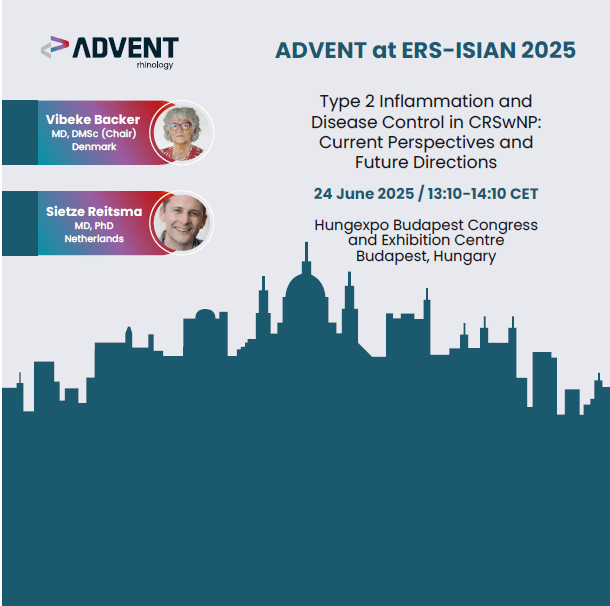
ADVENT at ERS-ISIAN 2025
Join experts Vibeke Backer, MD, DMSC, and Sietze Reitsma, MD, at an educational symposium involving a comprehensive exploration of the type 2 inflammation and its pivotal role in the pathogenesis and management of CRSwNP.

Type 2 Inflammation Contributes to Itch and Fibrois in PN
Join Dr. Kwatra outlining the micro itch cycle involving type 2 cell polarization and cytokines that directly affect fibroblasts to cause more immune dysregulation in PN.

Why Is It Important to Assess Lung Function in Pediatric Asthma?
Learn about FEV1pp and the downstream effects of lung function decline in children with severe asthma.

Factors Contributing to Diagnostic Delays in Bullous Pemphigoid
Dr. Donna Culton focuses on the challenges of diagnosis and the unmet needs for patients with BP
IFOS 2023 | Type 2 Inflammation and Clinically Relevant Improvements in CRSwNP
Dr. Stella Lee and Profs. Peter Hellings and Wytske Fokkens discuss type 2 inflammation, partnering with patients to improve outcomes, and real-world data on biologic effectiveness in CRSwNP.
Hindered Growth in Children Aged <12 Years with Moderate-to-Severe AD and Potential Improvement with Dupilumab Treatment
In this soundbite video from the April 2025 ADVENT Forum in Lisbon, Portugal, Dr Amy Paller discusses how moderate-to-severe AD may hinder growth in pediatric patients and highlights data showing treatment with dupilumab may increase vertical growth in children of lower stature.

ERS 2024 | Panel Discussion: What Might Be Required for On-Therapy Remission in Pediatric Severe Asthma?
In this ADVENT symposium at the 2024 European Respiratory Society conference, Drs. Sharon Dell and Leonard Bacharier discuss the potential domains of on therapy clinical remission in pediatric severe asthma, emphasizing lung function as a key parameter for children.

FeNO Is a Noninvasive Biomarker That Can Support Diagnosis and Management for Asthma Patients
Learn how FeNO, a noninvasive biomarker for type 2 inflammation, can be used to optimize care for asthma patients.
ERS 2024 | Airway Remodeling: A Permanent or Transitory Consequence in Severe Asthma Patients?
Join Klaus Rabe, MD, PhD, FERS; Celeste Porsberg, MD, PhD; and Mario Castro, MD, MPH, for a symposium on airway remodeling in severe asthma patients.
