76 search results for: patient burden
Bullous Pemphigoid Differential Diagnosis and Management Interactive Tool
This interactive tool systematically guides healthcare providers through the complete diagnostic pathway for suspected bullous pemphigoid and provides a comparative overview of leading international treatment guidelines to inform optimal patient management.
ADVENT at IRS-ISIAN | The Importance of Understanding Smell Loss and Congestion in CRSwNP
Join Profs. Sachio Takeno and Joaquim Mullol for an educational symposium highlighting the multifaceted burden associated with loss of smell and congestion in patients with uncontrolled CRSwNP.

Beyond the Skin: Understanding Systemic Comorbidities in Prurigo Nodularis
Professor Matthias Augustin highlights the high prevalence of both atopic and non-atopic comorbidities in patients with PN, including increased risks of cardiovascular events and all-cause mortality.

Bullous Pemphigoid (BP): Don't Miss the Diagnosis
This static infographic covers the clinical presentations, diagnostic challenges, and disease burden of bullous pemphigoid (BP), a chronic relapsing autoimmune skin disease. Review the steps of diagnosis, which include clinical assessment and laboratory work. Explore comorbidities associated with BP and how they impact patient quality of life.
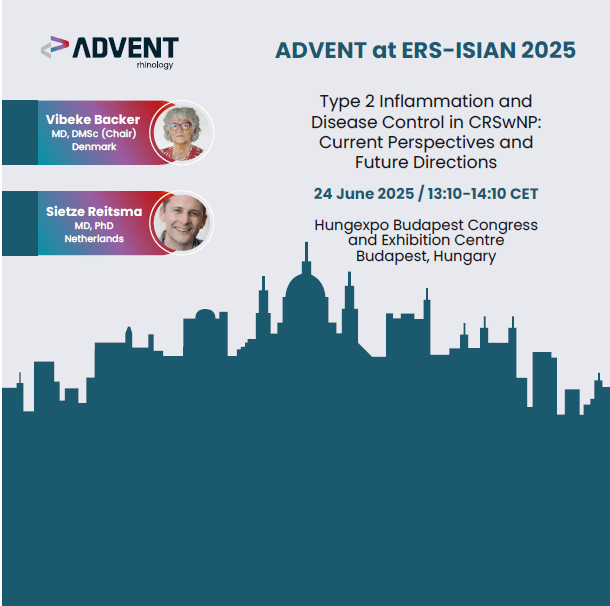
ERS-ISIAN 2025 | Type 2 Inflammation and Disease Control in CRSwNP: Current Perspectives and Future Directions
In this educational presentation, Profs. Vibeke Backer and Sietze Reitsma cover key aspects of type 2 inflammation and its role in the pathogenesis and management of CRSwNP and practical strategies for optimizing disease control and improving patient outcomes.
World Anosmia Day 2026
Join the effort to improve CRSwNP care. World Anosmia Day serves as an opportunity to raise awareness about the loss of the sense of smell. Access some of countless educational resources with ADVENT below.
ADVENT on Air: OCS in CRSwNP Podcast
Listen to experts, Dr. Amber Luong and Dr. Marjolein Cornet, discuss the significant burden of oral corticosteroid (OCS) use in chronic rhinosinusitis with nasal polyps (CRSwNP) and its short-term, long-term, and cumulative risks, particularly for patients with coexisting conditions like asthma. Experts highlight the need for improved multidisciplinary approaches and OCS-sparing strategies to optimize patient care.

Decoding Chronic Itch and More in PN: Implications of Real-World Data for Clinical Practice
This symposium highlights type 2 inflammation as a key driver of chronic itch and the characteristic skin lesions of prurigo nodularis and evaluates the real-world implications of targeted therapies on clinical practice.

Compounded Burden of Co-existing Type 2 Airway Diseases
In this video soundbite from the EAACI 2025 symposium, Dr. Brian Lipworth discusses that co-existing type 2 inflammatory diseases are common in patients with CRSwNP & increasing severity of asthma is associated with higher severity of CRS and prevalence of nasal polyps. Additionally, he explains that patient burden is substantially greater when asthma and CRSwNP are co-existing.

ERS-ISIAN 2025 | Type 2 Inflammation: Links with Severe/Uncontrolled CRSwNP
Prof. Vibeke Backer provides an insightful presentation on the association of type 2 inflammation and the pathogenesis and management of severe and uncontrolled CRSwNP.
Uncovering the Impact of Moderate COPD Exacerbations
The infographic provides information about the clinical characteristics used to classify moderate COPD exacerbations and the impact of these events on lung function, future risk, and mortality.
The Burden of a Lifetime: Can Disease Modification Rewrite the Narrative of Atopic Dermatitis?
Join Professors Jean-David Bouaziz, Amy Paller, and Alan Irvine for a dynamic presentation on the multifaceted burden of atopic dermatitis, the evolving concept of disease modification, and how targeted systemic therapies may help improve long-term patient outcomes.
