76 search results for: patient burden
Blisters and Beyond: Autoimmunity Meets Type 2 Inflammation in Bullous Pemphigoid
Join Dr. Victoria Werth in exploring the clinical presentation of BP and how type 2 inflammation contributes to the development of disease signs and symptoms

ADVENT On Air | Burden of Disease and Diagnosis of Bullous Pemphigoid
Drs Donna Culton and Russell Hall explore the Burden of Disease and Diagnosis of BP.

The Path to Nodules: Type 2 Inflammation at the Core of Chronic Itch and Fibrosis in Prurigo Nodularis
Join Dr. Shawn Kwatra in discussing the diverse clinical presentations of PN and the role of type 2 inflammation in disease pathogenesis.

Bullous Pemphigoid (BP): Exploring New Frontiers
Join experts Dédée Murrell, Donna Aline Culton, Joost Meijer and Enno Schmidt for an educational presentation on the clinical presentation, disease burden, diagnosis, and underlying pathophysiology of bullous pemphigoid (BP). Dive deeper into unmet needs and treatment challenges faced by these patients and how targeted therapies may address them.
Assessment of Smell Loss in CRSwNP Interactive Infographic
Use this educational tool to explore the daily burden of loss of smell for patients with CRSwNP.

The Weight of Breath: The Impact of Pediatric Asthma on Patients and Caregivers
Learn about the multifaceted burden of uncontrolled pediatric asthma on patients and their caregivers.

Expert Interview: Featuring Dr Shawn Kwatra on PN itch and impact on patients
Join Dr Kwatra as he dives deeper into the mechanism of lesion formation in Prurigo Nodularis and the impact the development of these skin lesions have on patient life.
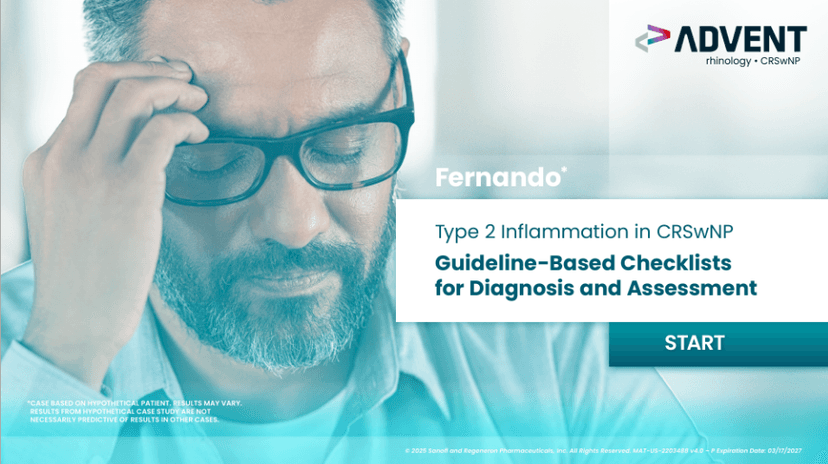
CRSwNP Interactive Patient Case Tool
Meet Fernando. Journey through his clinical profile, applying guideline-based checklists to reach a consensus regarding his diagnosis.
The Benefits of Early Intervention in AD: More Than Skin Deep
Many AD treatment goals focus on clinical manifestations, so that if a patient is free of lesions, their disease is considered well controlled. However, the inflammatory process underlying AD reaches far beyond the skin, affecting patients in unique ways at different stages of their lives. Education on the importance of treating AD beyond the skin and altering the treatment approach to fit the individual patient will help improve clinical management and reduce long-term patient burden.
ERS-ISIAN 2025 | Treatable Traits in CRSwNP
Join Prof. Sietze Reitsma for an insightful presentation that will delve into identifying and leveraging key characteristics to optimize patient management and treatment outcomes.

Bullous Pemphigoid Is a Challenging Disease to Manage
Dr. Donna Culton discusses the difficulties in managing patients with bullous pemphigoid who are often older and medically vulnerable.

The Shared Path: Type 2 Inflammation As a Driver of Chronic Itch
Professor Matthias Augustin highlights the role of type 2 inflammation in chronic itch across distinct pruritic skin diseases and the cumulative burden of chronic itch and skin lesions in PN.
