66 search results for: symposium
Decoding Chronic Itch and More in PN: Implications of Real-World Data for Clinical Practice
This symposium highlights type 2 inflammation as a key driver of chronic itch and the characteristic skin lesions of prurigo nodularis and evaluates the real-world implications of targeted therapies on clinical practice.
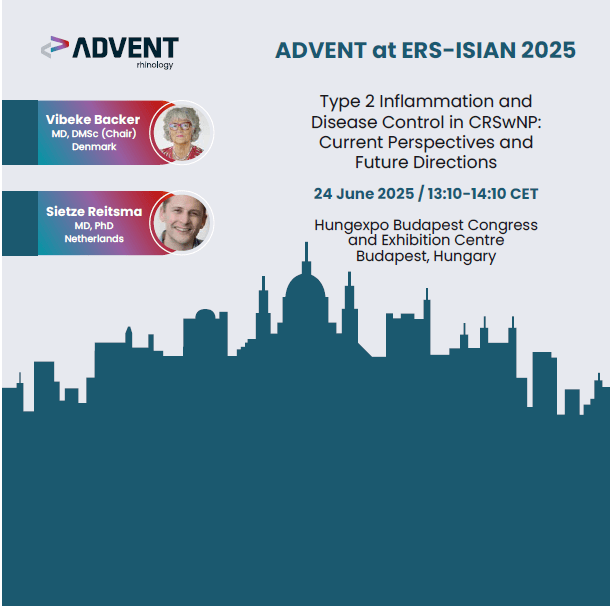
ADVENT at ERS-ISIAN 2025
Join experts Vibeke Backer, MD, DMSC, and Sietze Reitsma, MD, at an educational symposium involving a comprehensive exploration of the type 2 inflammation and its pivotal role in the pathogenesis and management of CRSwNP.
ADVENT at NAPNAP 2025
Join experts Jonathan Spergel, MD, PhD, Wanda Phipatanakul, MD, MS, and Jerry Ellen Schonfeld, CPNP, at an educational symposium as they investigate the role of type 2 inflammation in pediatric diseases. The speakers will also discuss the difficulties in diagnosis and burdens patients and their families face.

Cracking the Code: Diagnosing and Managing Skin Diseases With Type 2 Inflammation
This symposium delves into the pivotal role of type 2 inflammation in diverse skin conditions, including atopic dermatitis, prurigo nodularis, chronic spontaneous urticaria, and bullous pemphigoid. It highlights both shared and distinct disease mechanisms and patient burdens, providing crucial insights for optimizing clinical management strategies through a series of engaging panel discussions with Drs Eichenfield, Elmariah, Culton, and Hawkes.
A Tale of Two Itches: Bridging the Gap With Type 2 Inflammation in PN and CSU
Join Drs. Elmariah, Kim, and Metz as they explore the latest research on neuro-immune mechanisms driving chronic itch and inflammation in PN and CSU.
Translating the Science of CSU: From Pathogenesis to Patient Outcomes
Join Drs. Michihiro Hide, Marta Ferrrer, and Ana M. Giménez-Arnau as they discuss chronic spontaneous urticaria (CSU) and highlight the unmet needs, treatment challenges, and emerging therapies.
Translating the Science of CSU: From Pathogenesis to Patient Outcomes
Watch as Drs. Michihiro Hide, Marta Ferrrer, and Ana M. Giménez-Arnau discuss chronic spontaneous urticaria (CSU) and highlight the unmet needs, importance of disease control, and emerging therapies.
ADVENT at ERS 2024
The ADVENT program will present four symposia sharing the latest science in asthma and COPD at the 2024 European Respiratory Society (ERS) Congress. Visit Booth #A4.02 to learn more about ADVENT.
ADVENT at EADV 2024
Join ADVENT at EADV 2024 congress (European Academy of Dermatology and Venereology) for 2 educational symposia on type 2 inflammation in atopic dermatitis and bullous pemphigoid. Visit Booth #A13 to learn more about type 2 inflammatory skin diseases with ADVENT.

ADVENT at UEG Week 2026
Sit down with three leading experts—Professors David Rubin, MD; Evan Dellon, MD, MPH; and Thomas Greuter, MD—for a patient case–based roundtable discussion bringing together inflammatory bowel disease (IBD) and eosinophilic esophagitis (EoE) perspectives on progression and esophageal remodeling in EoE.
How Biologic Therapy May Lead to Disease Modification in Infants and Children with Atopic Dermatitis
The underlying pathophysiology of atopic dermatitis (AD) is driven by dysregulation of type 2 immunity that contributes to skin barrier dysfunction. AD typically develops very early in life and children with AD often develop other atopic conditions such as food allergy, asthma, and allergic rhinitis in a progression called the atopic march. Early treatment may help reduce the atopic march and other comorbidities to lessen the lifetime burden created by these diseases. There may even be a window of opportunity for disease modification.
