102 search results for: Atopic Dermatitis

Key Treatment Considerations for Management of Atopic Dermatitis in Children
In this highlight video from the October 2024 ADVENT symposium at EAPS in Vienna, Austria, Dr Perla Lansang reviews the key considerations for management of AD that is uncontrolled with topical therapies in children and the criteria to determine whether a patient is indicated for systemic therapy

Current and Emerging Therapeutic Options for Children With Atopic Dermatitis
In this video of the October 2024 ADVENT symposium at EAPS in Vienna, Austria, Dr Perla Lansang reviews the current and emerging treatment options for children with AD uncontrolled with topical therapy, including a summary of recent long-term data for advanced systemic therapies

Navigating Complex Definitions: Early Intervention and Disease Modification in Atopic Dermatitis
Dr. Amy Paller discusses the evolving concepts of early intervention and disease modification in AD and describes potential biomarkers of subclinical control at EADV 2025.

The Effect of Dupilumab on the Atopic March and Risk of Nonatopic Comorbidities in Pediatric Patients With AD
In this soundbite video from the April 2025 ADVENT Forum in Lisbon, Portugal, Prof. Thomas Bieber discusses how early dupilumab intervention in pediatric atopic dermatitis may alter the atopic march, reducing the risk of developing atopic comorbidities as well as nonatopic comorbidities such as infections and psychosomatic issues.

Atopic and Nonatopic Comorbidities in AD and the Importance of Early Intervention
In this soundbite video from the April 2025 ADVENT Forum in Lisbon, Portugal, Dr Amy Paller reviews the increased risk of atopic and nonatopic comorbidities associated with atopic dermatitis and discusses the potential of early intervention to mitigate their development.

Charting the Future: Preventing the Atopic March
In this clip from the April WCPD 2025 symposium, Dr Eulàlia Baselga discusses data identifying atopic dermatitis as the first diagnosed atopic disease and the start of the atopic march.
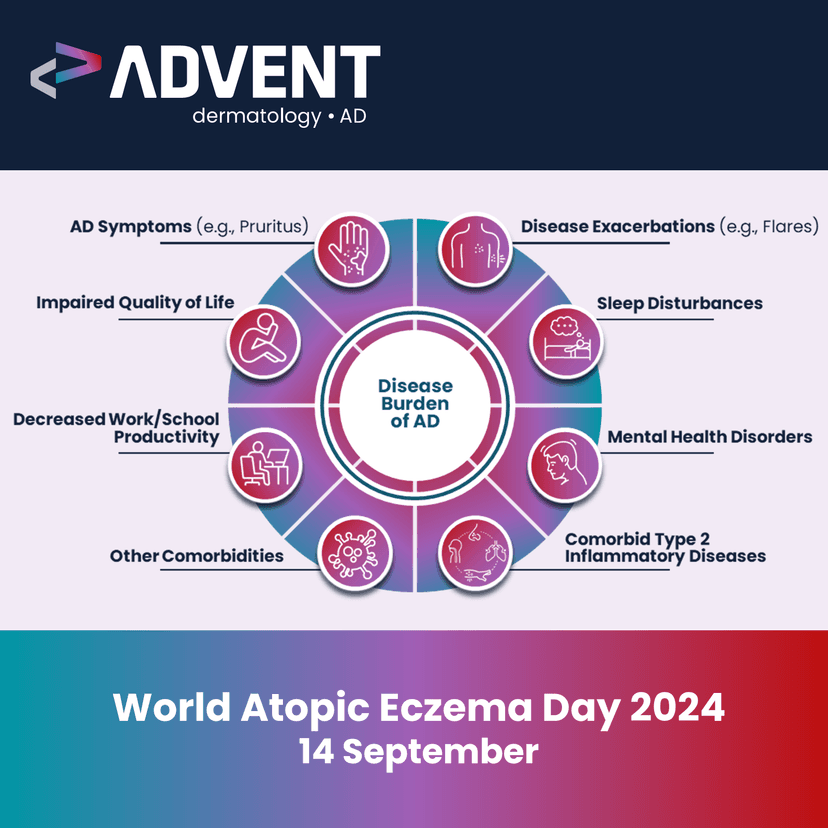
World Atopic Eczema Day 2024 | 14 September
In recognition of World Atopic Eczema Day 2024, ADVENT is providing medical education resources to increase the awareness of atopic dermatitis (AD).

Exploring the Potential Disease-Modifying Approaches in AD
Explore the concept of disease modification in atopic dermatitis through this interactive infographic, which highlights potential considerations such as optimal sustained disease control, subclinical inflammation, the pathophysiology of AD, and atopic/non-atopic comorbidities.
ADVENT at WCPD 2025
The ADVENT symposium at the 15th World Congress of Pediatric Dermatology (WCPD) will focus on discussions around disease modification in atopic dermatitis (AD) in three main topic areas: restoring the skin barrier, reducing non-atopic comorbidities, and stopping the atopic march in pediatric patients with AD aged 6 months to 11 years.

Beyond Clinical Control: Targeting Type 2 Inflammation for Improved Patient Outcomes
Prof Alan Irvine presents the latest clinical and real-world evidence supporting the potential for disease modification in atopic dermatitis, at EADV 2025.

Differential Effects of Dupilumab and JAK Inhibitors on CCL17 (TARC) in Patients With AD
In this soundbite video from the April 2025 ADVENT Forum in Lisbon, Portugal, Prof. Oscar Palomares compares the effects of biologics and JAK inhibitors on the biomarker CCL17 (TARC) in atopic dermatitis.

Under the Itchy Surface: The Insidious, Cumulative Burden of Type 2 Inflammation in AD
In this soundbite video from the March 2025 ADVENT symposium in Orlando, Florida, Dr. Eric Simpson highlights the systemic nature of atopic dermatitis (AD) and how the disease burden extends beyond the skin. Through the lens of cumulative life course impairment, Dr. Simpson explores how persistent type 2 inflammation in AD may drive both atopic and nonatopic comorbidities, emphasizing the importance of early, effective treatment to alter disease progression.
