32 search results for: CRSwNP

AFRS Disease Burden Infographic
This infographic highlights the clinical burden of Allergic Fungal Rhinosinusitis (AFRS), including disease severity, recurrence, complications, and impact on patients compared with CRSwNP.
IFOS 2023 | Type 2 Inflammation and Clinically Relevant Improvements in CRSwNP
Dr. Stella Lee and Profs. Peter Hellings and Wytske Fokkens discuss type 2 inflammation, partnering with patients to improve outcomes, and real-world data on biologic effectiveness in CRSwNP.

Partnering With Patients: Scores That Matter in CRSwNP
Learn how partnering with patients and considering the clinical relevance of symptom improvements can improve patient quality of life

World Anosmia Awareness Day
Explore our educational resources about loss of smell and the role of type 2 inflammation in CRSwNP, featuring expert insights from Profs. Wytske Fokkens and Joaquim Mullol.

ADVENT On Air | Back Again: Predicting Recurrence in Chronic Rhinosinusitis with Nasal Polyps
Learn from Drs. Buchheit and Wagenmann as they discuss key patient traits that predict disease recurrence in CRSwNP.

ADVENT at ERS 2026
Join Sanofi and Regeneron for four educational symposia on asthma, COPD, and the unified airway.
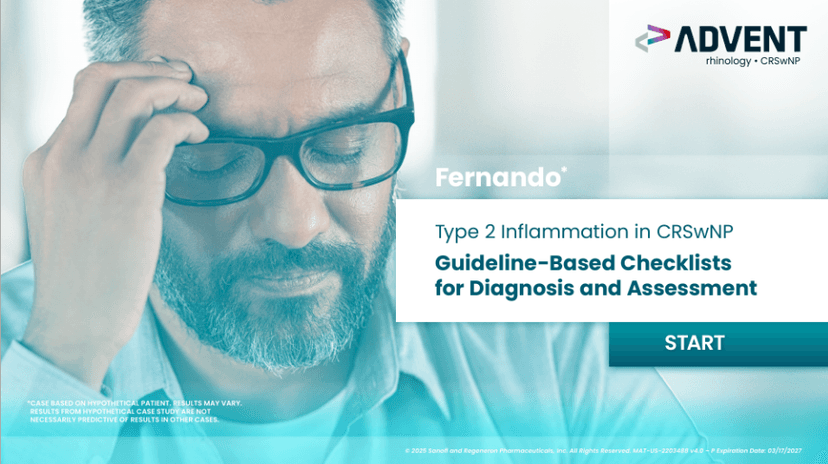
CRSwNP Interactive Patient Case Tool
Meet Fernando. Journey through his clinical profile, applying guideline-based checklists to reach a consensus regarding his diagnosis.

EAACI 2024 | On-Treatment Clinical Remission in Upper and Lower Airways: Going Beyond Symptom Control
Join experts G. Walter Canonica, Vibeke Backer, and Joaquim Mullol for an educational symposium on elevating treatment goals from control to remission in the upper and lower airways.
