172 search results for: Pathophysiology

The Effect of Dupilumab on the Atopic March and Risk of Nonatopic Comorbidities in Pediatric Patients With AD
In this soundbite video from the April 2025 ADVENT Forum in Lisbon, Portugal, Prof. Thomas Bieber discusses how early dupilumab intervention in pediatric atopic dermatitis may alter the atopic march, reducing the risk of developing atopic comorbidities as well as nonatopic comorbidities such as infections and psychosomatic issues.

Differential Effects of Dupilumab and JAK Inhibitors on CCL17 (TARC) in Patients With AD
In this soundbite video from the April 2025 ADVENT Forum in Lisbon, Portugal, Prof. Oscar Palomares compares the effects of biologics and JAK inhibitors on the biomarker CCL17 (TARC) in atopic dermatitis.

Dupilumab Reduces Total IgE and Allergen-Specific IgE in a Real-World Study of Pediatric Patients With AD and Type 2 Comorbidities
In this soundbite video from the April 2025 ADVENT Forum in Lisbon, Portugal, Prof. Oscar Palomares discusses evidence demonstrating that dupilumab reduces both total and allergen-specific IgE in pediatric patients with atopic dermatitis and comorbid allergic diseases, underscoring the role of IL-4/IL-13 blockade in modulating B-cell activity.
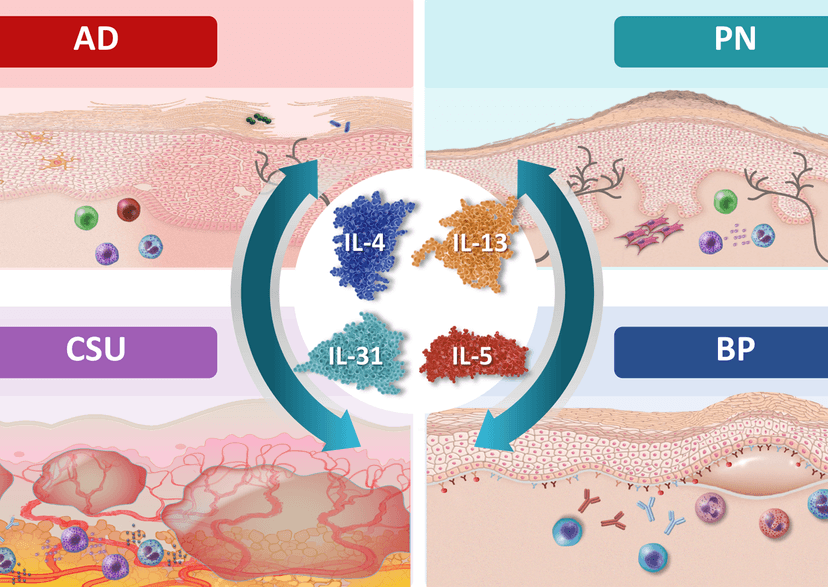
What Went Wrong? How Dysregulated Type 2 Immunity Contributes to AD, PN, CSU, and BP
This is the full presentation of the March 2025 ADVENT cross-dermatology symposium, hosted in Orlando, Florida, presenting the latest information around type 2 inflammation and its association with atopic dermatitis (AD), prurigo nodularis (PN), chronic spontaneous urticaria (CSU) and bullous pemphigoid (BP).

What Went Wrong? How Dysregulated Type 2 Immunity Contributes to AD, PN, CSU, and BP
This full video presentation of the March 2025 ADVENT cross-dermatology symposium, hosted in Orlando, Florida features Dr. Eric Simpson, Dr. Shawn Kwatra, Dr. Jason Hawkes and Dr. Victoria Werth. The faculty present the latest information around type 2 inflammation and its association with atopic dermatitis (AD), prurigo nodularis (PN), chronic spontaneous urticaria (CSU) and bullous pemphigoid (BP).

Spotlight on Type 2 Inflammation in the Upper and Lower Airways
In this video soundbite from the EAACI 2025 symposium, Dr. Zuzana Diamant explains pathophysiological mechanisms underlying asthma and CRSwNP, and how type 2 inflammatory cytokines drive airway remodelling in patients with severe asthma. Additionally, patients with co-existing asthma and CRSwNP have a higher type 2 inflammatory burden than patients with asthma alone.

ERS-ISIAN 2025 | Treatable Traits in CRSwNP
Join Prof. Sietze Reitsma for an insightful presentation that will delve into identifying and leveraging key characteristics to optimize patient management and treatment outcomes.

ERS-ISIAN 2025 | Type 2 Inflammation: Links with Severe/Uncontrolled CRSwNP
Prof. Vibeke Backer provides an insightful presentation on the association of type 2 inflammation and the pathogenesis and management of severe and uncontrolled CRSwNP.

ERS-ISIAN 2025 | Disease Control in CRSwNP
Unpack the keys to successful disease control in CRSwNP alongside expert Prof. Vibeke Backer. Learn how to navigate treatment pathways for improved patient quality of life.

ERS-ISIAN 2025 | Type 2 Inflammation and Disease Control in CRSwNP: Current Perspectives and Future Directions
The ERS-ISIAN 2025 symposium, featuring Prof. Vibeke Backer and Prof. Sietze Reitsma, titled "Type 2 Inflammation and Disease Control in CRSwNP: Current Perspectives and Future Directions," will delve into the complexities of the role of type 2 inflammation in CRSwNP.

The Burden of a Lifetime: Can Disease Modification Rewrite the Narrative of Atopic Dermatitis?
Professors Bouaziz, Paller, and Irvine discuss the clinical burden of atopic dermatitis, the biomarkers of subclinical control, and evidence of potential disease modification in AD at EADV 2025.
Charting the Future: Preventing the Atopic March
In this video from the April 2025 WCPD symposium, Dr Eulàlia Baselga discusses how early intervention during infancy and childhood in patients with AD may reduce the progression of the atopic march. Dr Baselga goes on to review data showing how the reduction of biomarkers such as IgE and CCL17 may reduce inflammation and sensitization that contribute to atopic comorbidities.
