65 search results for: expert insights
Digging Deeper: Reducing Non-Atopic Comorbidities and Multidimensional Disease Burden
In this video from the April 2025 WCPD symposium, Dr Paula Luna discusses the multidimensional disease burden in pediatric patients with AD and the data regarding how early intervention may lead to long-term disease control and a reduced risk of developing non-atopic comorbidities.
Itch in Prurigo Nodularis
In this soundbite video from the April 2025 ADVENT Forum in Lisbon, Portugal, Dr Brian Kim discuss the burdensome itch in prurigo nodularis, the multifactorial etiology of the disease, and the multiple pathological factors that contribute to chronic itch and skin inflammation in PN.
ADVENT On Air | Exploring The Urgency to Treat in Atopic Dermatitis
Professor Lisa Beck explores the chronic and persistent burden of atopic dermatitis (AD) as well as the concept of early intervention in patients with AD.
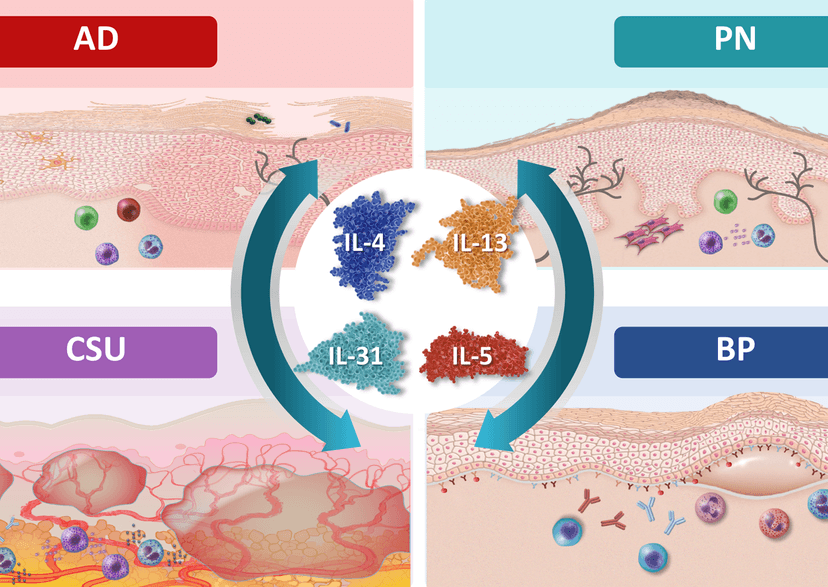
What Went Wrong? How Dysregulated Type 2 Immunity Contributes to AD, PN, CSU, and BP
This is the full presentation of the March 2025 ADVENT cross-dermatology symposium, hosted in Orlando, Florida, presenting the latest information around type 2 inflammation and its association with atopic dermatitis (AD), prurigo nodularis (PN), chronic spontaneous urticaria (CSU) and bullous pemphigoid (BP).
Coexisting Type 2 Inflammatory Diseases Can Add to the Patient Overall Disease Burden
In this soundbite video from the April 2025 ADVENT Forum in Lisbon, Portugal, Prof. Oscar Palomares highlights how patients with type 2 inflammatory diseases often experience multimorbidities, with overlapping symptoms that amplify their overall disease burden and impact quality of life.
KOL Video Interview – Dr Amy Paller
In this exclusive video interview, Dr Amy Paller discusses two topics: 1) The importance of CCL17 (TARC) as a biomarker in pediatric patients with AD, and 2) How IL-4 and IL-13 contribute to skin barrier dysfunction in AD.
ADVENT On Air | Early Intervention and Disease Modification in Atopic Dermatitis
Prof. Thomas Bieber explores early intervention and disease modification in atopic dermatitis.

ESPGHAN 2025 Pediatric EoE: Clinical Data & Long-Term Management
Dr Gutiérrez Junquera discusses ESPGHAN guidelines, clinical data, and long-term management strategies for pediatric EoE.
CRSwNP at Center Stage: Impact of Biologics in Patients with Co-existing Type 2 Asthma
In this video soundbite from the EAACI 2025 symposium, Dr. Philippe Gevaert explains how biologic options for uncontrolled CRSwNP are increasing, and phase 3 studies of approved biologics show improved outcomes and decreased SCS use/surgery in patients with CRSwNP. Additionally, he explains how biologics targeting type 2 inflammatory pathophysiology potentially improve outcomes for eligible patients with co-existing CRSwNP and asthma.

Compounded Burden of Co-existing Type 2 Airway Diseases
In this video soundbite from the EAACI 2025 symposium, Dr. Brian Lipworth discusses that co-existing type 2 inflammatory diseases are common in patients with CRSwNP & increasing severity of asthma is associated with higher severity of CRS and prevalence of nasal polyps. Additionally, he explains that patient burden is substantially greater when asthma and CRSwNP are co-existing.