50 search results for: coexisting diseases
Spotlight on Type 2 Inflammation in the Upper and Lower Airways
In this video soundbite from the EAACI 2025 symposium, Dr. Zuzana Diamant explains pathophysiological mechanisms underlying asthma and CRSwNP, and how type 2 inflammatory cytokines drive airway remodelling in patients with severe asthma. Additionally, patients with co-existing asthma and CRSwNP have a higher type 2 inflammatory burden than patients with asthma alone.

ESPGHAN 2025 Pediatric EoE: Early Identification & Type 2 Comorbidity
Dr Tzivinikos discusses the importance of early identification and management of pediatric EoE to improve long-term outcomes
From Protective Type 2 Immunity to Aberrant Type 2 Inflammation
In this soundbite video from the April 2025 ADVENT Forum in Lisbon, Portugal, Prof. Oscar Palomares explains how type 2 immunity evolved to protect against parasites, venoms, and toxins, and how its dysregulation can result in aberrant type 2 inflammation underlying multiple chronic inflammatory diseases.
Dupilumab Reduces Total IgE and Allergen-Specific IgE in a Real-World Study of Pediatric Patients With AD and Type 2 Comorbidities
In this soundbite video from the April 2025 ADVENT Forum in Lisbon, Portugal, Prof. Oscar Palomares discusses evidence demonstrating that dupilumab reduces both total and allergen-specific IgE in pediatric patients with atopic dermatitis and comorbid allergic diseases, underscoring the role of IL-4/IL-13 blockade in modulating B-cell activity.
How Does Protective Type 2 Immunity Become Harmful Type 2 Inflammation?
In this video from the March 2025 ADVENT symposium in Orlando, Florida, Dr. Eric Simpson discusses how protective type 2 immunity can become dysregulated, leading to harmful type 2 inflammation. The associated inflammatory process can contribute to the pathophysiology of several dermatological diseases, including AD, PN, CSU, and BP.
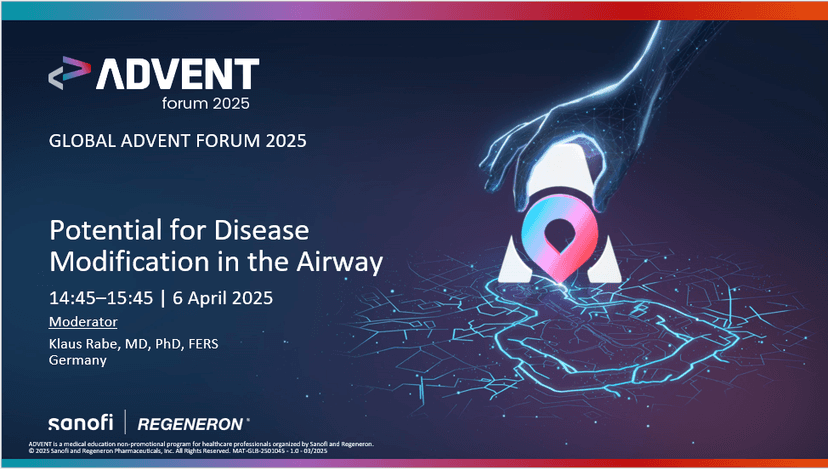
2025 ADVENT Forum | Potential for Disease Modification in the Airway
Unlock new perspectives on managing chronic airway diseases. Profs. Leonard Bacharier, Eugenio De Corso, Stella Lee, Marc Miravitlles, Celeste Porsbjerg, Klaus Rabe, and Martin Wagenmann – share their collective wisdom and experience on the evolving landscape of therapeutic strategies aimed at truly modifying disease progression, offering renewed hope for patients and practitioners alike.

What Went Wrong? How Dysregulated Type 2 Immunity Contributes to AD, PN, CSU, and BP
The March 2025 ADVENT symposium in Orlando, Florida brought together 4 dermatology experts to explore the evolving science of type 2 inflammation. Type 2 inflammation plays a central role in the pathophysiology of multiple dermatological diseases, driving chronic immune dysregulation that affects patients with atopic dermatitis (AD) prurigo nodularis (PN), chronic spontaneous urticaria (CSU) and bullous pemphigoid (BP). Understanding the mechanisms behind type 2 inflammation is key to advancing care and improving patient quality of life.
EoE: A Chronic, Progressive, Type 2 Inflammatory Disease Infographic
Learn about key drivers of type 2 inflammation in EoE and how they mediate progressive esophageal remodeling and impact patient burden

Master Clinician Video | Empowering Our Patients: Patient-Centered Practice and Follow-Up in the Clinic (Chapter 4)
This chapter focuses on the importance of shared decision-making and regular, long-term monitoring of histology and endoscopy, not just symptoms.
The Benefits of Early Intervention in AD: More Than Skin Deep
Many AD treatment goals focus on clinical manifestations, so that if a patient is free of lesions, their disease is considered well controlled. However, the inflammatory process underlying AD reaches far beyond the skin, affecting patients in unique ways at different stages of their lives. Education on the importance of treating AD beyond the skin and altering the treatment approach to fit the individual patient will help improve clinical management and reduce long-term patient burden.

Children and EoE: More Than Just Being a Picky Eater
Join Prof. Alexandra Papadopoulou as she reviews the multifaceted burden of children with EoE.

EoE Burden and Pathophysiology of Type 2 Inflammation
Learn about the significant burden that patients with EoE experience, and the role of type 2 inflammation in this chronic, progressive disease.
