43 search results for: disease control

Can Therapy-Free Disease Control Be Achieved in Atopic Dermatitis?
In this soundbite video from the April 2025 ADVENT Forum in Lisbon, Portugal, Prof. Amy Paller reviews a Japanese study showing that early proactive treatment of infant atopic dermatitis with topical corticosteroids reduced the incidence of food allergy but was also associated with decreased gains in height and weight.

The Burden of a Lifetime: Can Disease Modification Rewrite the Narrative of Atopic Dermatitis?
Professors Bouaziz, Paller, and Irvine discuss the clinical burden of atopic dermatitis, the biomarkers of subclinical control, and evidence of potential disease modification in AD at EADV 2025.
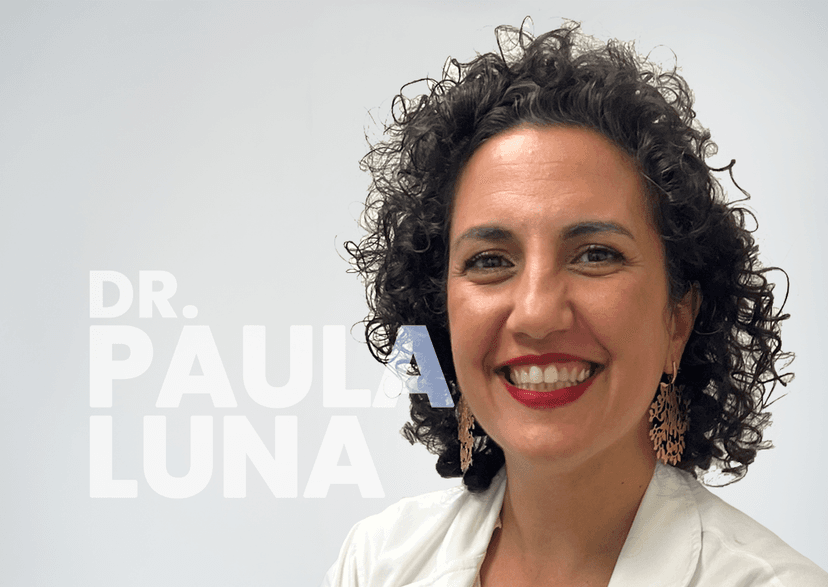
Digging Deeper: Reducing Non-Atopic Comorbidities and Multidimensional Disease Burden
In this video from the April 2025 WCPD symposium, Dr Paula Luna discusses the multidimensional disease burden in pediatric patients with AD and the data regarding how early intervention may lead to long-term disease control and a reduced risk of developing non-atopic comorbidities.

Emerging Perspectives on the Disease Burden and Management of Children with Atopic Dermatitis
Join Christine Bangert, Mark Boguniewicz and Perla Lansang for an educational symposium on atopic dermatitis (AD) in children, exploring the diagnosis and pathophysiology of AD in children, the life-long effects of uncontrolled disease beyond the skin, and current and emerging therapies.

Navigating Complex Definitions: Early Intervention and Disease Modification in Atopic Dermatitis
Dr. Amy Paller discusses the evolving concepts of early intervention and disease modification in AD and describes potential biomarkers of subclinical control at EADV 2025.

Emerging Perspectives on the Disease Burden and Management of Children With Atopic Dermatitis
This video of the October 2024 ADVENT symposium at EAPS in Vienna, Austria features Drs Christine Bangert, Mark Boguniewicz, and Perla Lansang as they discuss the inflammatory processes driven by type 2 cytokines that lead to AD and atopic comorbidities, the multidimensional and cumulative disease burden associated with AD and its comorbidities, and the current and emerging treatment options for children with AD uncontrolled with topical therapy

CLCI in Atopic Dermatitis Infographic
This infographic highlights how uncontrolled moderate‑to‑severe atopic dermatitis (AD) can lead to Cumulative Life Course Impairment (CLCI) by contributing to ongoing physical, psychological, and social burdens such as itch and sleep loss, impaired bone growth and mental health challenges. It emphasizes the importance of early and effective disease control to help reduce long‑term impact on patients.

Beyond Signs and Symptoms: Broadening Treatment Goals in Dermatology
Dr Lawrence Eichenfield explores the broadening of treatment goals for long-term disease control, highlighting the importance of this approach in atopic dermatitis. Drs Culton, Elmariah, and Hawkes expand the discussion to further examine specific management goals unique to each skin disease (bullous pemphigoid, prurigo nodularis, and chronic spontaneous urticaria).
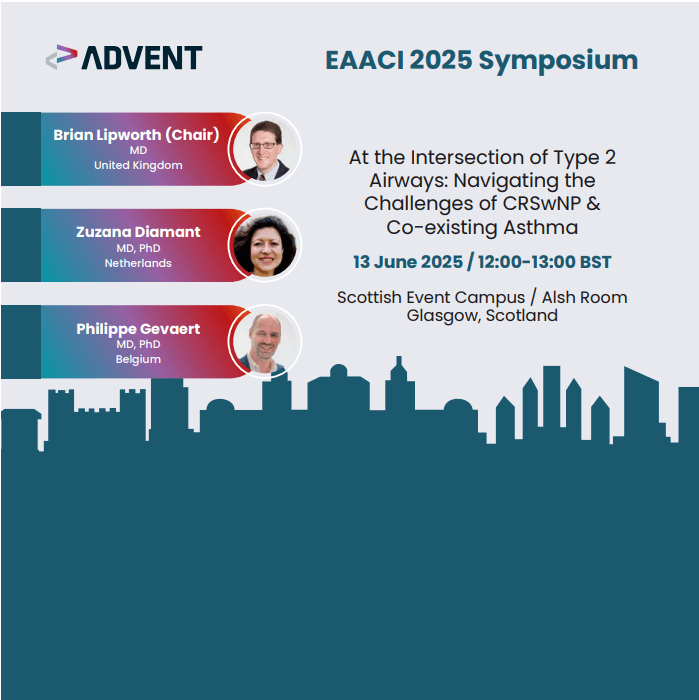
ADVENT at EAACI 2025
Join Profs. Brian Lipworth, Zuzana Diamant, and Philippe Gevaert at an sponsored symposium about the latest strategies for the management of co-existing type 2 asthma and severe and/or uncontrolled CRSwNP.

2025 ADVENT Forum | Joint Plenary Session: A View into the Life of Our Patients Video
This cross-TA plenary session addressed challenges in type 2 inflammation-driven diseases. Esteemed faculty, including Profs Klaus Rabe, Sharon Dell, Anju Peters, Milli Gupta, Eric Simpson, Stella Lee, and moderator Oscar Palomares, discussed strategies to enhance quality of life, reduce disease burden, and prioritize patient-centered care.

Giselle Mosnaim, MD, MS, FAAAAI, FACAAI
Giselle Mosnaim is a board-certified allergist and immunologist at Endeavor Health and Clinical Assistant Professor at the University of Chicago Pritzker School of Medicine. An internationally recognized expert in asthma and allergic diseases, her clinical and research interests focus on severe and uncontrolled asthma, digital health, and improving patient outcomes through innovative, evidence-based care.

Connecting Type 2 Inflammation to CRSwNP
Prof. Claus Bachert describes how type 2 inflammation drives CRSwNP.
